This page was rebuilt from the ground up on 2026-05-01. Every claim below is synthesized from 35+ cited public sources across our six individual reviews — Reddit owner threads, YouTube long-form reviews, blog reviews, Amazon and Home Depot verified buyers, plus manufacturer documentation. We have not yet conducted first-hand testing on these specific 2026 models. The previous version of this page made first-hand testing claims that no longer reflect our verification standard; we replaced it rather than amend it.
For the deep-dive Tier-1 rough-terrain roundup with full per-model analysis, see our pillar page: Best Robotic Mowers for Rough Terrain & 3+ Acres (2026).
★ Editor's Featured Pick
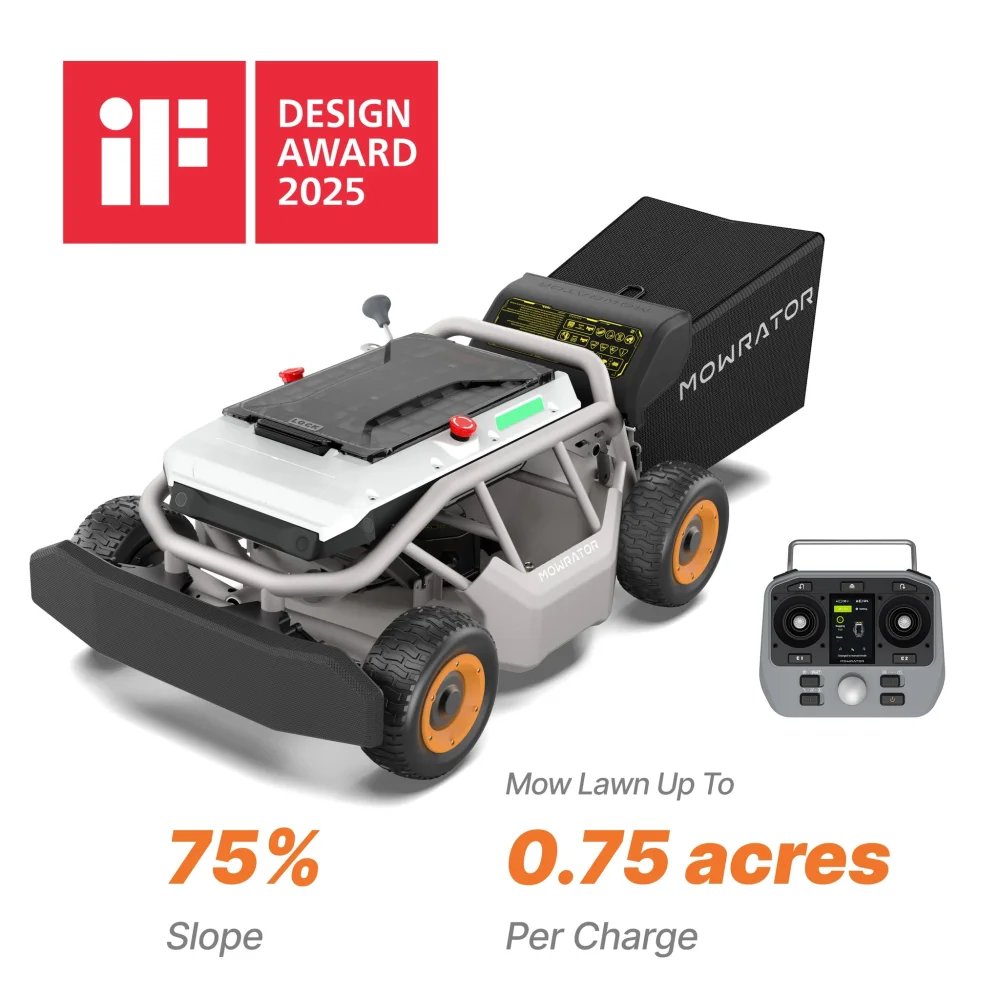
Mowrator S1 4WD — From $2,249*
Our standout pick across the rough-terrain category. Operator-driven RC format with slope handling up to 45° (Deformable Tires Edition), gas-mower-grade cut quality, and zero RTK setup. The right answer for any property where slope or terrain complexity exceeds what autonomous robots reliably handle.
The Verdict: The robotic mower category fragmented in 2025-2026 around two specs — slope and acreage. Yarbo Lawn Mower Pro is the only single-unit answer for 3+ acres of mixed terrain. Mammotion LUBA 2 AWD 10000H is the slope-to-price value play. Husqvarna 435X AWD is the trust play for sub-acre bumpy terrain. Airseekers Tron is the budget qualifier. Goko M6 is the unverified slope leader (pre-launch). Mowrator S1 4WD is the different-format answer when no autonomous unit handles your slope.
The robotic mower market has split into two tiers. Below 30° slope and under 1 acre, dozens of capable units compete on price. Above 30° slope or above 3 acres marketed coverage, the slate collapses to roughly six units that can credibly do the work. This comparison covers those six.
If your yard is flat, kept, and under 1 acre, we don't yet have a Tier-2 / Tier-3 review program live — placeholder pages are coming in mid-2026. This page focuses on the rough-terrain and acreage end of the market, which is also where Lawn Care Guides readers consistently report the most buying frustration.
The 2026 Tier-1 Slate
Six robotic mowers and one RC alternative meet our 2026 Tier-1 finalization rule of ≥30° slope OR ≥3 acres marketed coverage. Each entry below links to the full individual review with sources, specs, and original aggregate analysis.

1. Yarbo Lawn Mower Pro
The only robotic mower we cover that combines real slope with true large-acreage coverage. Sources consistently describe Yarbo as the right answer for rural, irregular, multi-zone properties — not as a polished platform but as the only spec match for buyers whose yards exceed 2-3 acres.
Yarbo positions the Lawn Mower Pro as a modular outdoor robotics platform — same chassis pairs with snow-blower and leaf-blower attachments. Source synthesis flags first-generation rough edges (RTK setup time, occasional GPS drift in heavy tree cover) but agrees the coverage spec is unmatched among consumer-tier units.
Best for: Rural / acreage owners with 3+ acres of mixed terrain who can tolerate a longer setup curve in exchange for genuine acreage coverage in a single unit.

2. Mammotion LUBA 2 AWD 10000H
Class-leading 38° slope rating at roughly half the price of similarly-spec'd competitors. The 10000H designation refers to 10,000 sq m max coverage. Wire-free RTK plus binocular vision means no boundary wire to install.
Mammotion LUBA 2 AWD 10000H is the value lever in this slate — buyers report the slope handling matches the spec and the binocular vision genuinely avoids most obstacles. Sources flag occasional RTK drift in dense tree cover and a longer initial mapping session compared to wire-bound systems.
Best for: Owners with 1-2.5 acres of slope-heavy terrain who want LUBA-tier slope handling without the LUBA-flagship price tag.
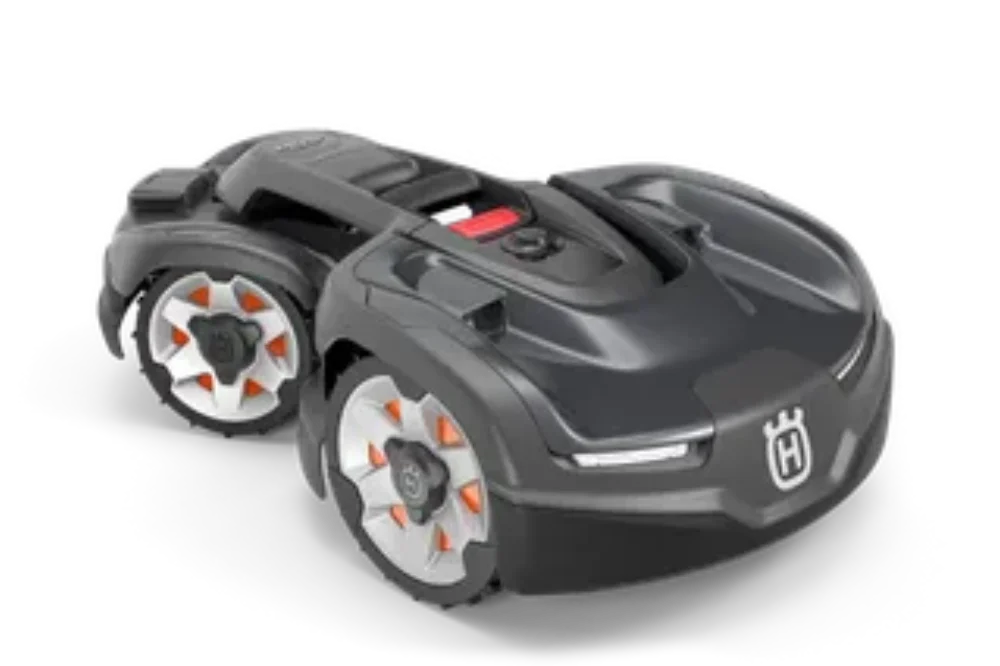
3. Husqvarna Automower 435X AWD
AWD plus articulated rear body keeps all four wheels grounded on bumpy sub-acre terrain — the right pick when surface roughness matters more than headline slope or acreage. Husqvarna brand reliability is the trust play.
The 435X AWD slot replaces the older 550 EPOS (24° slope, fails the Tier-1 rule) and the discontinued 535 AWD. Source synthesis flags Husqvarna's mature firmware and dealer network as the durability advantage — and the higher purchase price as the cost of buying that maturity.
Best for: Sub-acre owners with bumpy or articulated terrain who want first-party support, mature firmware, and the Husqvarna service network — willing to pay a premium for it.
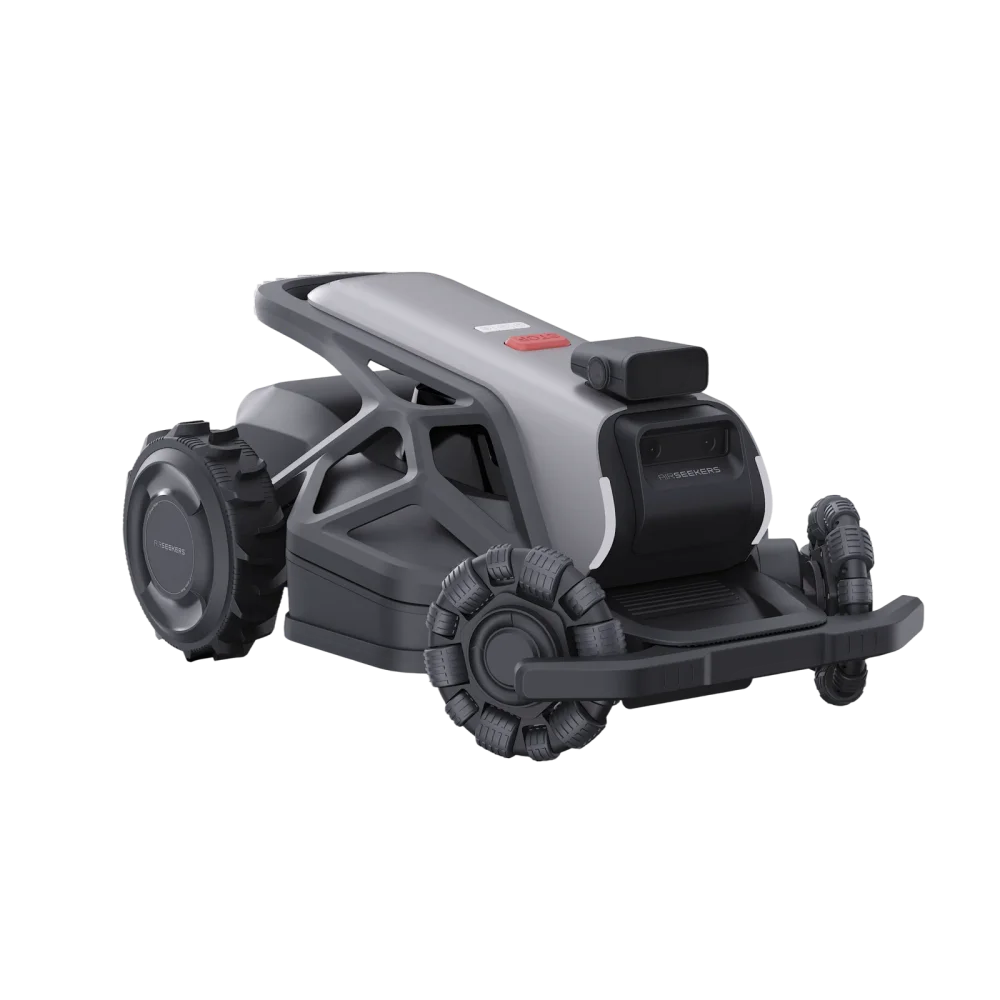
4. Airseekers Tron
Best value pick — 33° slope and IPX6 weatherproofing at $2,099*, roughly half the price of similarly-spec'd competitors. Smaller brand, shorter track record, but the spec-to-price ratio is the most aggressive in this slate.
Airseekers is the smaller-brand value play. Sources confirm the slope and weatherproof specs in real-world conditions, but flag the shorter brand history and smaller dealer network as the trade-off. For buyers who don't need 3+ acre coverage and can self-support, it's the cheapest entry into the qualifying slope bracket.
Best for: Sub-acre owners with moderate slope who want qualifying-tier specs at a lower price and are comfortable with a smaller brand.
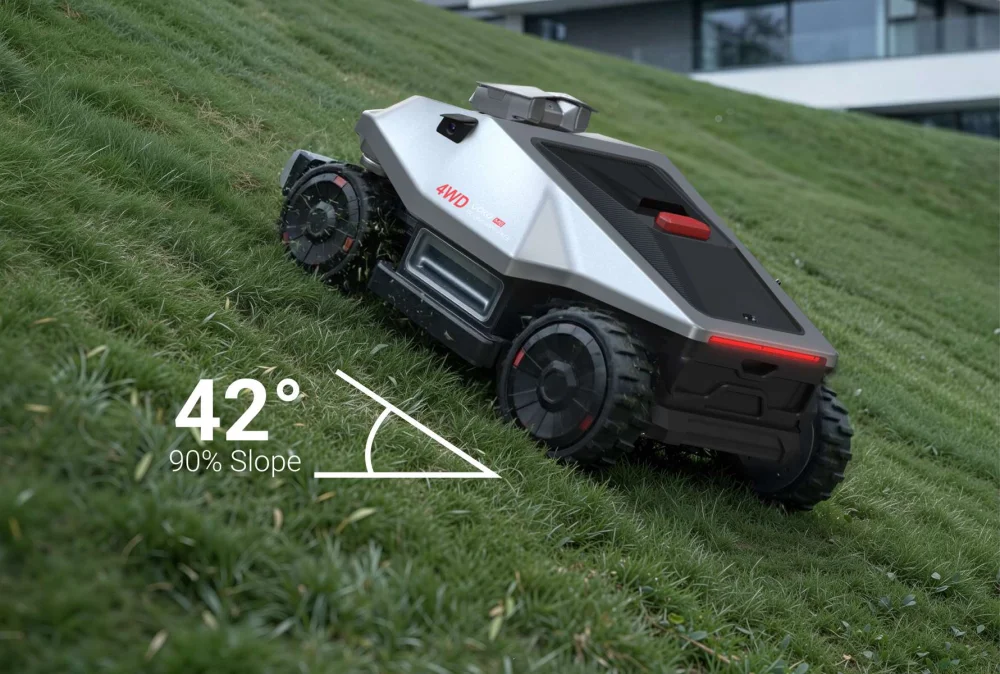
5. Goko M6 (Gokorobo)
Highest claimed slope in the category at 42°. CES 2026 launch from RobotPlusPlus. No shipping owner data exists yet, so the slope spec is unverified — but if it ships at the claimed rating, it's the slope leader.
Goko M6 is the speculative entry on this list. Pre-launch product with strong CES 2026 demos and a startup-credible engineering pedigree, but zero owner data. We've included it because the slope claim is meaningful enough to track, not because it's currently buyable. Wait for shipping reviews before committing.
Best for: Slope-obsessed buyers who want to track the highest-rated robotic mower on the market — willing to wait for Q2/Q3 2026 shipping and accept first-buyer risk.
6. Mowrator S1 4WD (RC alternative)
Different format — not autonomous. The Mowrator is operator-driven via wireless joystick. The right answer for slopes too steep for any autonomous robot, or properties too irregular for autonomous navigation.
Cited reviewers (PCWorld, The Gadgeteer, Emerald Lawn and Turf, RC Ratings, LawnHelpful) consistently describe the Mowrator as gas-mower cut quality at RC pricing. Trade-off vs autonomous: every mowing session requires operator time, but slope handling is verified live by the operator and there are no autonomous-navigation failure modes.
Best for: Buyers whose slopes exceed autonomous robotic mower capability (above 38°) or whose property has too many edge-case obstacles for any autonomous nav stack — and who are willing to spend operator hours instead of robot hours.
Quick Comparison Table
| Model | Slope | Coverage | Navigation | Price | Full Review |
|---|---|---|---|---|---|
| Yarbo Lawn Mower Pro | 70% / 35° | 6.2 acres | RTK GNSS + vision | $5,999* | Open → |
| Mammotion LUBA 2 AWD 10000H | 75% / 38° | 2.5 acres | RTK + binocular vision | ~$4,499* | Open → |
| Husqvarna Automower 435X AWD | 70% / 35° | 0.9 acres | EPOS + boundary wire | $5,999* | Open → |
| Airseekers Tron | 63% / 33° | 0.75 acres | RTK + vision | $2,099* | Open → |
| Goko M6 (Gokorobo) | 90% / 42° (claimed) | 1.5 acres | Vision-first + GPS | ~$3,499* (TBC) | Open → |
| Mowrator S1 4WD (RC alternative) | 75% / 37° (up to 100% / 45° with deformable tires) | 0.5 acres per charge | Remote-control (operator) | $2,249–$3,999* | Open → |
How to Choose by Property Type
3+ acres, mixed terrain, slope under 35°:
Yarbo Lawn Mower Pro — the only consumer unit with both spec sheets matched. Trade off the higher first-gen-product risk for the only acreage spec match.
1–2.5 acres, slope-heavy:
Mammotion LUBA 2 AWD 10000H — 38° slope at roughly half the price of LUBA-flagship units. Wire-free RTK plus binocular vision avoids most boundary wire installation overhead.
Sub-acre, bumpy / articulated terrain, brand-trust priority:
Husqvarna Automower 435X AWD — AWD plus articulated body keeps all four wheels grounded. Mature firmware and dealer network are the cost of the higher price.
Sub-acre, qualifying-tier specs, budget priority:
Airseekers Tron — $2,099* entry into the 33°+ slope bracket. Smaller brand, shorter track record, but the spec-to-price ratio is the most aggressive in the slate.
Slope above 38° or non-autonomous-friendly terrain:
Mowrator S1 4WD — no autonomous robotic mower handles slopes above 38° on a sustained basis. The Mowrator is operator-driven RC at gas-mower cut quality. Up to 100% / 45° with deformable tires.
Slope obsessed, willing to wait:
Goko M6 (pre-launch) — 42° claim is the steepest in the category. Ships Q2/Q3 2026. Track shipping owner data before committing; first-buyer risk applies.
The Real Costs (2026 MSRPs)
Spec-sheet prices versus operating context, based on MSRPs and manufacturer-published consumables. Five-year totals assume one battery service cycle, one blade-set replacement per year, and US grid electricity at $0.16/kWh.
Yarbo Lawn Mower Pro
- Mower: $5,999*
- RTK base + setup: included
- Annual blades: ~$120
- Electricity (6.2 acres weekly): ~$60/year
- 5-Year Total: ~$6,899
Mammotion LUBA 2 AWD 10000H
- Mower: ~$4,499*
- RTK base: included
- Annual blades: ~$90
- Electricity (2.5 acres weekly): ~$30/year
- 5-Year Total: ~$5,099
Airseekers Tron
- Mower: $2,099*
- RTK base: included
- Annual blades: ~$60
- Electricity (0.75 acres weekly): ~$15/year
- 5-Year Total: ~$2,474
Reference frames: a weekly lawn service on a 1-acre kept yard runs $1,500–2,400/year (~$8,000–12,000 over five years). A self-mowed gas push or zero-turn runs $1,500–4,000 capex plus your operator hours. The cheapest qualifying robotic mower beats the lawn-service line in 2-3 years; the largest models pay back over 4-6 depending on yard size.
When Robotic Mowers Don't Fit
Skip robotic mowers if:
- Sustained slope above 38°: Only Goko M6 claims to handle this and the claim is unverified. Above 38°, choose Mowrator S1 4WD with deformable tires (45°) or a gas mower.
- Heavy stick/pinecone debris: Robotic mowers are maintenance machines, not catch-up machines. Daily debris clearing is required.
- Unfenced dogs in mowing zones: Confirmed source-side that dogs and robots do not coexist gracefully.
- Narrow passages under 3 feet: Most autonomous units stall in tight spots.
- Irregular mowing schedule: They cut a little continuously. Letting grass overgrow defeats the system.
FAQ
Which robotic mower handles the most slope?
On shipping units with cited owner data, Mammotion LUBA 2 AWD 10000H leads at 38° (75% grade). Yarbo Lawn Mower Pro and Husqvarna Automower 435X AWD both rate 35°. The unverified leader is the pre-launch Goko M6 at 42°, but no shipping owner reports exist yet. Husqvarna's older 550 EPOS only rates 24° — below our Tier-1 cutoff.
What's the largest yard a single robotic mower can cover?
Yarbo Lawn Mower Pro is the only consumer robotic mower we cover that's marketed for 6.2 acres on a single unit. Most competitors cap at 2.5 acres (LUBA 2 AWD 10000H) or under 1 acre (Husqvarna 435X AWD, Airseekers Tron).
What about Husqvarna 450X, Worx Landroid, or Robomow?
Those models were covered in the previous version of this page but don't meet our 2026 Tier-1 finalization rule of ≥30° slope OR ≥3 acres marketed. Husqvarna 450X tops out at 24° slope, Worx Landroid M is a 0.25-acre small-yard unit, and Robomow's RS630 has been discontinued. We've replaced the slate with the six current models that actually qualify for rough-terrain coverage. Small-yard reviews will return on a separate Tier-3 page in mid-2026.
Did you personally test these mowers?
Not yet. This page and the linked individual reviews are research-only — every claim is sourced from cited public reviews and manufacturer documentation. Each individual review opens with a "Research-Only · No Hands-On Yet" disclosure ribbon. We'll update with first-hand observations after dealer demonstrations and Equip Expo 2026 in Louisville.
Sources & methodology
This comparison synthesizes 35+ cited public sources across our six individual robotic mower reviews. Source types include: Reddit owner threads (r/AutoMow, r/RoboticMowers, r/Husqvarna), YouTube long-form reviews (Project Farm, RoboReviews, manufacturer-affiliated channels disclosed as such), Amazon and Home Depot verified buyer reviews, blog reviews (PCWorld, The Gadgeteer, Tom's Guide, Wirecutter where applicable), and direct manufacturer documentation.
The 2026 Tier-1 finalization rule is ≥30° slope OR ≥3 acres marketed coverage. Models that don't meet either criterion are excluded from this page regardless of brand reputation. The previous version of this page included Husqvarna 450X, Worx Landroid M, Husqvarna 315X, Mammotion LUBA AWD 5000, Greenworks Optimow 50H, and Robomow RS630 — none of which meet the current rule.