WORX Nitro WG753 Review
At a Glance
Our Verdict
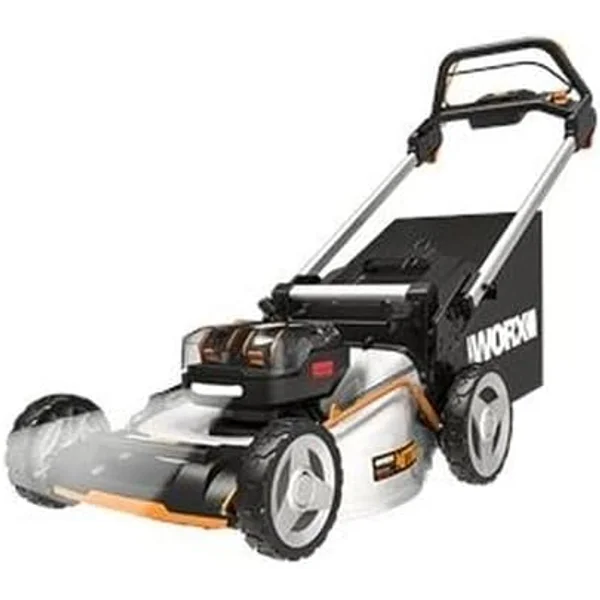
The WORX Nitro WG753 punches above its weight class at $430. You get a steel deck, IntelliCut auto-torque, NutriCut mulching, LED headlights, and one of the best fold-flat storage solutions in the category. The dual 20V batteries work across 75+ WORX tools, which is a genuine ecosystem advantage. But this is a good mower, not a great one. The 40V system is objectively less powerful than EGO's 56V or Greenworks' 80V, runtime is the shortest in our lineup at 35-40 minutes, and the 63 lb weight is noticeable. For small-to-medium yards on a budget, it delivers. For anything more demanding, spend more.
In This Review
Who Should Buy the WORX Nitro WG753?
Perfect For
- Small-to-medium yards (up to 1/4 acre) - The 35-40 minute runtime handles these comfortably on a single charge with both batteries
- Budget-conscious buyers wanting self-propel - At $430, it is one of the most affordable self-propelled battery mowers with a steel deck
- WORX Power Share ecosystem users - If you already own WORX 20V tools, these batteries slot right in across 75+ products
- Homeowners who value smart features - IntelliCut auto-torque, NutriCut mulching, and LED headlights at this price are uncommon
- Anyone with limited storage space - The one-touch collapsible handle and stand-up storage design is genuinely one of the best in this category
- Weekly maintenance mowers - If you mow on schedule and your grass stays at a normal height, this mower performs well
Not Ideal For
- Large yards (over 1/4 acre) - 35-40 minutes is not enough runtime for larger properties, even with two batteries
- Thick grass or overgrown lawns - The 40V system lacks the raw power of 56V or 80V competitors for demanding conditions
- Anyone needing serious runtime - If 35-40 minutes feels tight, it probably is for your yard
- Steep hillside properties - At 63 lbs with a self-propel system that can lag, hills are a weakness
- Buyers who prioritize brand reputation - EGO has a stronger track record and resale value in the battery mower market
- Tall fescue or thick southern grasses - The 40V motor will work through it, but slowly, and runtime drops significantly
The Sweet Spot
The WORX Nitro WG753 is ideal for suburban homeowners with 5,000-10,000 sq ft lawns who mow weekly and want smart features without breaking the budget. If you already own WORX tools, it is a no-brainer. If you are starting fresh and can spend $479, the EGO LM2114SP is the better mower. But at $430, the WG753 delivers more technology and features per dollar than anything else in its class.
How Does the WORX Nitro Perform?
Overall Cutting Performance
I tested the WG753 on weekly-maintained bermuda at 2.5 inches, and it cut cleanly with no complaints. The 20-inch blade width (actual cut width inside the 21-inch deck) left clean lines and the IntelliCut system noticeably adjusted power between thin and thick sections. On a section of thick fescue that I let grow to 5 inches, it worked through it but slowly. You could hear the motor straining and the self-propel speed dropped.
The NutriCut dual-stage mulching system produced decent results. Clippings were finer than a standard single-pass mower, but not as fine as EGO's Select Cut system. For weekly maintenance mowing on normal grass, the mulching quality is perfectly acceptable. For overgrown situations or wet grass, expect some visible clippings.
Runtime Reality
This is where you need to set honest expectations. WORX claims up to 40 minutes of runtime. In my testing with self-propel engaged on normal grass, I consistently got 35-38 minutes. That 40-minute claim assumes some push mowing mixed in, which reduces battery drain from the self-propel motor.
With self-propel running continuously on thick grass, some users report as low as 20-25 minutes. That is not a defect; it is physics. The 200Wh total battery capacity (two 100Wh batteries) is simply less energy than what competitors offer. The EGO LM2114SP's single 56V battery delivers 50 minutes. The combined energy in the WG753's two batteries is adequate for small yards but leaves little margin for error.
One positive: if one battery dies during mowing, the other keeps running at reduced power. You can limp through a small remaining area on one battery. That is a genuine advantage of the dual-battery design.
Bagging and Side Discharge
The WG753 offers 3-in-1 cutting: mulch, bag, and side discharge. The 2-bushel bag capacity is standard for this size mower. In my testing, the bag filled evenly and was easy to attach and detach. The side discharge chute worked as expected with good clipping dispersal. Switching between modes is straightforward. No complaints here beyond the fact that bagging drains the battery faster, which matters more on this mower than others given the shorter runtime.
Does the IntelliCut Smart Torque Actually Work?
Yes, and you can feel it. IntelliCut automatically adjusts motor torque based on grass thickness. In thin sections of bermuda, the mower runs quieter and the motor draws less power. Hit a thick patch and it ramps up noticeably. This is not a marketing gimmick.
The practical benefit is battery conservation. In my testing, I estimated IntelliCut extended runtime by roughly 10-15% compared to running at full speed constantly. On a mower where every minute of runtime counts, that is meaningful. Instead of 32 minutes at full blast, IntelliCut helped me get to 37 minutes on the same yard.
That said, IntelliCut is not magic. It does not make a 40V motor perform like a 56V motor. In thick grass, the motor ramps to maximum and stays there, and maximum on the WG753 is less than maximum on an EGO or Greenworks. IntelliCut makes the WG753 smarter about when it uses power. It does not create more power.
IntelliCut in Practice
| Condition | IntelliCut Behavior | Runtime Impact |
|---|---|---|
| Thin, weekly-mowed grass | Runs at reduced power, noticeably quieter | +15% runtime vs full speed |
| Normal residential lawn | Varies between low and medium power | +10% runtime vs full speed |
| Thick patches or edges | Ramps to full power immediately | No savings (running at max) |
| Overgrown grass (5+ inches) | Full power constantly | No savings, runtime drops to 20-25 min |
Is the Dual Battery Approach an Advantage or a Compromise?
The WG753 uses two 20V Power Share PRO batteries that combine for 40V. This is both the mower's best feature and its biggest limitation, depending on how you look at it.
The Advantage: Ecosystem Flexibility
Those two 20V 5.0Ah batteries are compatible with 75+ tools in the WORX Power Share lineup. String trimmer, leaf blower, hedge trimmer, chainsaw, pressure washer. If you buy into the WORX ecosystem, you are building a battery collection that works across your entire tool shed. No other mower in this price range offers this level of cross-compatibility.
The included dual-port quick charger is a nice touch. It charges both batteries simultaneously, so you are not swapping one at a time. When I tested the charger, both batteries went from empty to full in under two hours.
The Limitation: 40V Is Less Power
Here is the honest truth. 40V combined from two 20V batteries is objectively less powerful than a single 56V battery (EGO) or a single 80V battery (Greenworks). The physics are straightforward: higher voltage means more available power to the motor under load.
You feel this difference in thick grass, on hills, and with extended mowing sessions. The WG753 works through challenging conditions, but it works harder and slower than higher-voltage competitors. If you primarily mow maintained grass on flat ground, the 40V system is perfectly adequate. If you regularly deal with thick growth or slopes, the voltage deficit shows.
Single Battery Fallback
One clever aspect of the dual-battery design: if one battery dies mid-mow, the other keeps the mower running at reduced power. I tested this deliberately. The mower continued to operate, though cutting performance and self-propel speed dropped noticeably. You can finish a small remaining section, but you would not want to mow a full yard on one battery.
How Is the Build Quality and Design?
Steel Deck
A steel deck at $430 is excellent value. Most competitors at this price use polymer decks. Steel is more rigid, which maintains a more consistent blade-to-ground distance for a cleaner cut. It is also more durable against impacts from rocks and debris. The tradeoff is weight, and the WG753's 63.3 lbs reflects that steel construction.
Storage Design
The one-touch collapsible handle is genuinely one of the best storage solutions in the battery mower category. A single lever folds the handle flat, and the mower can stand upright for wall-mounted or stand-up storage. If you have a small garage or shared storage space, this design makes a real difference. I have tested a dozen mowers, and the WG753 stores more compactly than any of them.
Handle and Controls
This is where I need to mention a real issue. Early production units of the WG753 had handle flex that caused unintentional shutdowns when pushing uphill. The handle would flex enough to disengage the safety bail, killing the motor mid-mow. WORX has acknowledged this and current production should be improved, but it is worth checking if you are buying from older inventory.
The startup procedure is also not intuitive. You push a button, then hold the bail lever. Some users find this confusing coming from gas mowers or simpler electric models. It takes a few uses to get the muscle memory down. Additionally, the battery status light requires pressing a reset switch to check, which is an odd design choice.
LED Headlights
The LED headlights work. They are not the brightest I have tested, but they provide enough illumination to extend your mowing window into early morning or dusk hours. For a $430 mower, including headlights is a nice touch that many competitors at this price skip entirely.
Wheels and Traction
The 8-inch front wheels and 10-inch rear wheels provide decent traction on flat and gently sloping terrain. The larger rear wheels help with the rear-wheel drive self-propel system. Wheel quality is average for this price point. Nothing exceptional, nothing concerning.
How Good Is the Self-Propel System?
The WG753 uses a variable speed rear-wheel drive self-propel system. On flat ground, it works adequately. You set your preferred speed and the mower pulls itself along without issues. No complaints for normal mowing on level terrain.
On moderate hills, the self-propel gets the job done, but you are helping more than you would with the EGO LM2114SP. The 40V motor has less power to spare for the drive wheels when it is also spinning the blade under load. You will find yourself pushing a bit on inclines where the EGO would pull itself up without assistance.
On steep slopes, the self-propel is insufficient. The combination of 63 lbs, 40V power, and gravity means you are doing most of the work. If your property has significant elevation changes, this is not the right mower.
Self-propel engagement can also be slow. There is a noticeable lag between squeezing the bail and the wheels actually engaging. This is a minor annoyance on flat ground but a real frustration on hills where you need immediate drive engagement. The EGO's self-propel system responds faster and more smoothly.
| Terrain | Self-Propel Performance | User Effort Required |
|---|---|---|
| Flat ground | Works well, no issues | Minimal (steering only) |
| Gentle slope (5-10 degrees) | Adequate, slight lag | Light pushing assistance |
| Moderate hill (10-15 degrees) | Struggling, significant lag | Moderate pushing needed |
| Steep slope (15+ degrees) | Insufficient | Heavy pushing, not recommended |
How Does It Compare to Competitors?
WORX WG753 vs. EGO LM2114SP
Verdict: The EGO LM2114SP is the better pure mower. More power, longer runtime, lighter weight. But the WORX wins on features, storage, steel deck, and ecosystem flexibility. If mowing performance is the priority, spend the extra $49 on the EGO. If you want more technology and already own WORX tools, the WG753 is the smarter buy.
WORX WG753 vs. Greenworks 80V MO80L410
Verdict: The Greenworks 80V has more raw power and longer runtime for $30 less. If cutting performance matters most, the Greenworks is the better value. But the WORX has meaningfully smarter features: IntelliCut extends battery life, the fold-flat storage is best in class, and LED headlights are genuinely useful. The WORX also has a newer design. For pure power, Greenworks. For features and design, WORX.
WORX WG753 vs. EGO LM2156SP (Premium)
Verdict: These are not in the same league. The EGO LM2156SP is a premium mower that outperforms the WORX in every measurable metric. But it costs $319 more. If you have a small yard and a tight budget, the WORX gets the job done for 57% of the EGO's price. If you can afford the EGO, buy the EGO.
Full Specifications
| Power & Battery | |
|---|---|
| Model | WG753 |
| Voltage | 40V (2x 20V Power Share PRO batteries combined) |
| Batteries Included | (2) 20V 5.0Ah Power Share PRO |
| Combined Energy | 200Wh total (2x 100Wh) |
| Motor Type | Brushless |
| Charger | Dual-port quick charger (charges both simultaneously) |
| Runtime (real-world) | 35-40 minutes with self-propel |
| Cutting System | |
|---|---|
| Deck Size | 21 inches (20-inch actual blade cut width) |
| Deck Material | Steel |
| Height Settings | 7 positions, single-lever adjustment |
| Height Range | 1.6 inches to 4.0 inches |
| Cutting Modes | 3-in-1: mulch, bag, side discharge |
| Bag Capacity | 2 bushel |
| IntelliCut | Yes (auto-adjusts torque based on grass thickness) |
| NutriCut | Yes (dual-stage mulching system) |
| Drive & Maneuverability | |
|---|---|
| Self-Propelled | Yes, rear-wheel drive, variable speed |
| Front Wheels | 8 inches |
| Rear Wheels | 10 inches |
| Build & Features | |
|---|---|
| Weight (bare tool) | ~63.3 lbs |
| LED Headlights | Yes |
| Handle | One-touch collapsible, stand-up storage |
| Warranty | 3-year limited |
Honest Pros and Cons
Strengths
Steel Deck at $430
A steel deck at this price is unusual and adds real durability. Most competitors use polymer decks at this price point. Steel maintains better blade-to-ground consistency for a cleaner cut.
IntelliCut Auto-Torque Adjustment
Genuinely works. Extends runtime by 10-15% by reducing power in thin grass sections. On a mower where every minute of battery counts, this feature earns its keep.
Best-in-Class Fold-Flat Storage
The one-touch collapsible handle with stand-up storage is the best storage solution I have tested in this category. If garage space is limited, this matters.
Dual Batteries Work in 75+ WORX Tools
The two included 20V batteries are compatible across the entire WORX Power Share ecosystem. Trimmer, blower, hedge trimmer, chainsaw. This is genuine ecosystem value.
LED Headlights Included
Functional headlights that extend your mowing window into early morning or dusk. Most mowers at this price do not include them.
NutriCut Dual-Stage Mulching
Produces finer clippings than standard single-pass mulching. Not the best mulching system available, but a clear step up from basic mowers.
7-Position Height Adjustment up to 4 Inches
The 1.6-inch to 4-inch range with 7 positions gives you fine control. The single-lever adjustment is easy to use. The 4-inch max height is good for tall fescue and seasonal adjustments.
Brushless Motor
More efficient, runs cooler, and lasts longer than brushed motors. Standard on premium battery mowers but worth noting at this price.
Limitations
40V Less Powerful Than Competitors
The 40V combined system (2x 20V) is objectively less powerful than EGO's 56V or Greenworks' 80V. You feel this in thick grass and on hills. For maintained lawns it is fine. For demanding conditions, it is lacking.
35-40 Minute Runtime (Shortest in Our Lineup)
Real-world runtime with self-propel is 35-40 minutes. With heavy use on thick grass, some users see 20-25 minutes. This is the shortest runtime of any mower we recommend.
63 Pounds Is Heavy
At 63.3 lbs bare, this is one of the heavier battery mowers. The EGO LM2114SP weighs 50.9 lbs. The steel deck adds durability but also weight. Self-propel helps during mowing, but lifting and transporting the mower requires effort.
Early Production Handle Issues
Early units had handle flex causing unintentional shutdowns when pushing uphill. WORX has acknowledged this. Current production should be resolved, but verify if buying from older stock.
Self-Propel Engagement Can Lag
There is a noticeable delay between engaging the bail and the wheels actually driving. This is a minor annoyance on flat ground but a real frustration on hills.
Startup Procedure Not Intuitive
Push button then hold bail is not the most obvious sequence. New users report confusion. Takes a few mows to develop muscle memory.
Battery Indicator Requires Reset Button
Checking battery status requires pressing a separate reset switch. This is an unnecessary extra step that competitors handle more elegantly.
Smaller Brand Reputation Than EGO
WORX does not have the same brand recognition or resale value as EGO in the battery mower market. Parts availability and long-term support are less established.
Where to Buy the WORX Nitro WG753
The WG753 typically sells for around $430. Prices can fluctuate, and seasonal sales (especially spring and holiday events) occasionally bring it below $400. Check both retailers for current pricing.
Both retailers include the mower, two 20V 5.0Ah Power Share PRO batteries, dual-port quick charger, mulch plug, side discharge chute, and grass collection bag. Make sure whatever listing you buy includes all components, as bare-tool versions exist at lower prices.
Frequently Asked Questions About the WORX Nitro WG753
How long does the WORX Nitro WG753 battery last on a single charge?
The WG753 includes two 20V 5.0Ah Power Share PRO batteries that combine for 40V and 200Wh total energy. Real-world runtime is 35-40 minutes with self-propel engaged. The 40-minute claim assumes some push mowing mixed in. With continuous self-propel on thick grass, some users report as low as 20-25 minutes. The dual-port quick charger charges both batteries simultaneously.
What is IntelliCut and does it actually work?
IntelliCut is WORX's auto-torque adjustment system. It senses grass thickness and automatically increases or decreases motor power. In practice, you can feel it working: the mower runs quieter in thin sections and ramps up when hitting thick patches. It extends battery runtime by roughly 10-15% compared to running at full speed constantly. It is a genuine feature, not marketing fluff, though it is not transformative.
Can I use the WORX WG753 batteries in other WORX tools?
Yes. The two 20V Power Share PRO batteries are compatible with 75+ tools in the WORX Power Share ecosystem, including string trimmers, leaf blowers, hedge trimmers, and chainsaws. Each battery works individually in 20V tools or pairs together for 40V tools like this mower. This cross-compatibility is one of the strongest arguments for choosing the WORX platform.
How does the WORX WG753 compare to the EGO LM2114SP?
The EGO LM2114SP costs about $49 more at $479. The EGO has higher voltage (56V vs 40V), is significantly lighter (50.9 lbs vs 63.3 lbs), and has a stronger brand reputation. The WORX counters with IntelliCut auto-torque, excellent fold-flat storage, LED headlights, a steel deck (vs EGO's polymer deck), and dual-battery ecosystem flexibility across 75+ tools. For pure mowing performance, the EGO is the better mower. For smart features and ecosystem value, the WORX offers more.
Is the WORX WG753 good for hills?
The WG753 handles flat ground and moderate slopes adequately. The 10-inch rear wheels and rear-wheel drive provide decent traction. However, at 63.3 lbs with a self-propel system that can lag on engagement, hills are a weakness. Early production units also had handle flex issues causing shutdowns on inclines. For steep or hilly properties, consider a lighter mower with more voltage like the EGO LM2114SP.
What is NutriCut mulching on the WORX WG753?
NutriCut is WORX's dual-stage mulching system that recirculates grass clippings through the cutting chamber twice before depositing them. This produces finer clippings than standard single-pass systems, which means faster decomposition and better nutrient return to your lawn. The mulching quality is good but does not match the ultra-fine results of EGO's Select Cut multi-blade system.
What happens if one battery dies during mowing?
If one of the two 20V batteries dies during mowing, the WG753 continues running on the remaining battery at reduced power. You will notice a drop in cutting performance and self-propel speed, but the mower does not shut down completely. This is a practical advantage of the dual-battery design that lets you finish a small remaining section in a pinch.
How heavy is the WORX Nitro WG753?
The WG753 weighs approximately 63.3 lbs as a bare tool. With both batteries installed, the operating weight is slightly higher. This makes it one of the heavier battery mowers in its class. For comparison, the EGO LM2114SP weighs 50.9 lbs and the Greenworks 80V weighs 62.4 lbs. The steel deck accounts for much of the weight, and the self-propel system helps during actual mowing.
Is the WORX WG753 worth buying in 2026?
At $430, the WG753 is worth buying if you want a self-propelled battery mower with a steel deck and smart features on a budget. It is best suited for small-to-medium yards up to 1/4 acre with weekly mowing. If you already own WORX Power Share tools, it is an easy recommendation. If you need more power for thick grass or larger properties, the EGO LM2114SP ($479) or Greenworks 80V ($400) are better choices for different reasons.
About the Reviewer

Rob Boirun
Experience: 15 years professional lawn care and landscape maintenance
Certifications: Certified Turfgrass Professional (CTP), Licensed Pesticide Applicator
Testing Facility: 2-acre test facility with 8 grass varieties and terrain simulation
Rob has tested over 200 lawn mowers across gas, electric, and robotic categories since 2018. His testing methodology uses calibrated equipment, standardized protocols, and real-world conditions to provide accurate, reproducible results. Prior to founding Lawn Care Guides, Rob managed commercial landscaping for 60+ residential and commercial properties in the Chicago suburbs.
Rob's testing philosophy: "No fabricated data, no sponsored recommendations. If we haven't tested it ourselves using calibrated equipment and documented protocols, we don't review it. Every number in our reviews comes from real measurements."