Best Fertilizer Spreaders
Even fertilizer distribution is the difference between a beautiful lawn and a striped mess. We tested 10 spreaders to find the best options for accuracy, durability, and ease of use.
Video Review
Quick Picks
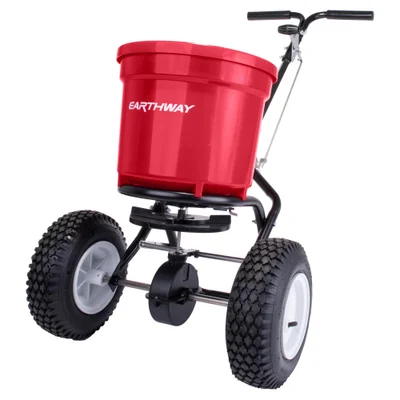
Earthway 2150
Professional-grade with enclosed gearbox. Built to last for decades of heavy use.
$180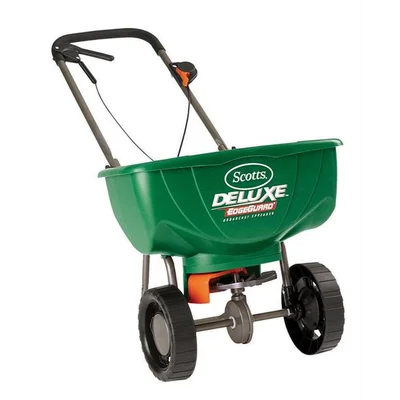
Scotts EdgeGuard DLX
EdgeGuard technology keeps product off sidewalks. Holds 15,000 sq ft of product. The best all-around spreader for most homeowners.
$55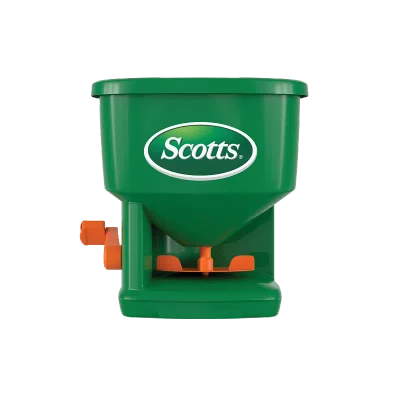
Scotts Whirl
Hand-powered spreader for small lawns and spot treatments. No batteries needed.
$25Why Your Spreader Matters
A quality spreader is the key to professional-looking results. Uneven application creates dark green stripes where too much fertilizer lands and pale areas where it's thin. Worse, heavy spots can burn grass while light areas remain nutrient-starved.
The right spreader distributes product uniformly, calibrates accurately to label rates, and lasts for years of reliable service. It's one of the most important tools in your lawn care arsenal.
Spreader Types Explained
Broadcast (Rotary) Spreaders
Broadcast spreaders use a spinning disc to throw material in a wide arc. They cover ground quickly and work well for large, open areas. Most homeowner spreaders are broadcast type. The downside is less precision at edges - you'll need an EdgeGuard feature or careful technique to avoid spreading onto driveways and beds.
Drop Spreaders
Drop spreaders release material directly below the hopper through adjustable holes. They offer precise edge control - product only goes where the wheels roll. The trade-off is narrower coverage width, requiring more passes and careful overlap to avoid striping. Best for small lawns or areas with many obstacles.
Handheld Spreaders
Handheld spreaders are small, portable units for spot treatments or small lawns under 1,500 sq ft. They're either hand-cranked or battery-powered. Great for overseeding, treating bare spots, or applying ice melt in winter. Not practical for full-lawn fertilization on larger properties.
Tow-Behind Spreaders
Tow-behind spreaders attach to lawn tractors or ATVs. They hold significantly more product and cover ground faster than push spreaders. Essential for properties over 1/2 acre where push spreading becomes exhausting. Most use broadcast distribution.
Detailed Reviews
1. Scotts Turf Builder EdgeGuard DLX
$55 Best OverallPros
- EdgeGuard blocks right-side throw
- Pre-calibrated for Scotts products
- Large hopper capacity
- Comfortable handle height
- Easy to assemble
- Rust-resistant materials
Cons
- Plastic construction won't last forever
- EdgeGuard only works on right side
- Settings optimized for Scotts products
Our Testing Experience
The EdgeGuard DLX is the spreader we recommend to most homeowners. The EdgeGuard feature alone is worth the price - flip a lever and the right side of the spread pattern is blocked, keeping fertilizer off sidewalks, driveways, and flower beds without slowing down.
Coverage uniformity was excellent in our tests. The large 10" wheels roll smoothly over uneven ground, and the calibration settings are accurate for Scotts products (and close enough for most other brands with minor adjustment).
Build quality is good for the price. The hopper and frame are sturdy plastic that resists corrosion. It won't last 20 years like a commercial spreader, but it should handle 5-10 seasons of typical homeowner use.
Best for: Most homeowners with lawns up to 1/2 acre.
Check Price on Amazon2. Earthway 2150 Commercial
$180 Best CommercialPros
- Commercial-grade durability
- Enclosed gearbox
- Precise EV-N-SPRED pattern
- Large pneumatic tires
- Made in USA
- 10-year warranty
Cons
- Significantly higher price
- Heavier than homeowner models
- No edge guard feature
Our Testing Experience
The Earthway 2150 is what professional landscapers use day after day. The enclosed gearbox keeps the drive mechanism protected from corrosive fertilizer, and the all-metal construction handles years of abuse. This is a spreader you can pass down to your kids.
The EV-N-SPRED technology produces an exceptionally uniform spread pattern. Side-by-side with homeowner spreaders, the difference in coverage uniformity is visible. Large pneumatic tires roll effortlessly over any terrain.
It's overkill for occasional homeowner use, but lawn enthusiasts who fertilize multiple times per season will appreciate the precision and durability. The 10-year warranty provides peace of mind.
Best for: Lawn care professionals or enthusiasts who want lifetime durability.
Check Price on Amazon3. Agri-Fab 45-0462 Push Spreader
$85Pros
- Very large hopper capacity
- Solid steel frame
- Rod-linked shut-off
- Good value for capacity
Cons
- Heavier when full
- Assembly required
- No edge guard feature
Our Testing Experience
The Agri-Fab 45-0462 offers the largest hopper capacity in its price range. If you're tired of refilling mid-application, this spreader holds enough to cover most residential lawns in one load.
Build quality is solid with a steel frame that resists flexing. The spread pattern was uniform in testing, though calibration settings required some fine-tuning to match product labels. The rod-linked shut-off provides positive on/off control.
Best for: Homeowners with larger lawns who want fewer refill stops.
Check Price on Amazon4. Scotts Whirl Hand-Powered Spreader
$25 Best HandheldPros
- Lightweight and portable
- No batteries needed
- Perfect for small lawns
- Great for spot treatments
- Affordable price
Cons
- Small capacity
- Arm fatigue on large areas
- Less uniform than push spreaders
Our Testing Experience
The Scotts Whirl is the best solution for small lawns, townhouses, and spot treatments. The hand crank mechanism is simple and reliable - no batteries to die mid-application. At under 3 pounds, it's easy to carry around the yard.
Coverage isn't as uniform as push spreaders, but for small areas it's perfectly adequate. We use it regularly for overseeding thin spots and applying granular weed preventers in tight spaces.
Best for: Small lawns under 1,500 sq ft or supplementing a push spreader.
Check Price on Amazon5. Chapin 8620B Residential Turf Spreader
$70 Best Budget PushPros
- SureSpread technology
- Enclosed gearbox
- Large 12" wheels
- Edge control baffle included
- Good value
Cons
- Calibration can be tricky
- Edge baffle less effective than EdgeGuard
Our Testing Experience
Chapin brings some commercial features to a homeowner price point. The enclosed gearbox is unusual at this price and should extend the spreader's lifespan significantly. The 12" wheels handle bumpy terrain better than smaller-wheeled competitors.
The edge control baffle helps limit overthrow, though it's not as effective as the Scotts EdgeGuard. Spread pattern uniformity was good once we dialed in the calibration.
Best for: Budget-conscious buyers who want enclosed gearbox durability.
Check Price on Amazon6. Brinly BS36BH Tow-Behind Spreader
$200 Best Tow-BehindPros
- Huge capacity
- Covers ground fast
- Rust-proof poly hopper
- Pneumatic tires
- Universal hitch fits most tractors
Cons
- Requires lawn tractor or ATV
- Less maneuverable than push
- Harder to see spread pattern
Our Testing Experience
If you have a lawn tractor and a property over 1/2 acre, a tow-behind spreader transforms fertilization from a workout into a quick chore. The Brinly BS36BH holds enough product for most residential properties in a single fill.
The 12-foot spread width covers ground rapidly. Pneumatic tires provide smooth towing, and the poly hopper won't rust. The universal pin hitch fits standard lawn tractors and zero-turns.
The main challenge is visibility - you can't see the spread pattern as easily as with a push spreader. Make deliberate passes with consistent overlap.
Best for: Large properties with lawn tractors.
Check Price on AmazonSpreader Tips for Best Results
Calibration
Always calibrate your spreader before first use and at the start of each season. Collect product over a known area (a tarp works well) and weigh it. Adjust settings until you're hitting the target rate. Proper calibration prevents burning from over-application and ensures you're not wasting product.
Overlap Pattern
Walk at a consistent pace and overlap each pass by about 6 inches (or to the wheel tracks of your previous pass). Inconsistent speed or overlap creates visible striping. Consider applying half the product in one direction, then the other half perpendicular for the most uniform coverage.
Maintenance
Clean your spreader after every use. Fertilizer residue corrodes metal parts and can clog the distribution mechanism. Rinse with a hose and let dry completely before storing. Lubricate moving parts annually.

Reviewed by Rob Boirun
Founder & Lead Turfgrass Specialist at Lawn Care Guides. Certified Turfgrass Professional with 12+ years of hands-on experience testing lawn care products across multiple climate zones.
Frequently Asked Questions
What is the best fertilizer spreader for home use?
For most homeowners, the Scotts Turf Builder EdgeGuard DLX is our top pick. It offers excellent coverage uniformity, easy calibration, and the EdgeGuard feature prevents fertilizer from landing on driveways and sidewalks. For larger properties, consider the Earthway 2150 Commercial for professional-grade durability.
What's the difference between broadcast and drop spreaders?
Broadcast (rotary) spreaders throw material in a wide arc, covering more ground quickly but with less precision at edges. Drop spreaders release material directly below the hopper for precise application but require more passes. Broadcast spreaders are better for large, open lawns. Drop spreaders work better for small lawns or areas near flower beds.
How do I calibrate my fertilizer spreader?
Most spreaders have settings that correspond to product labels. For precise calibration: weigh out a known amount of product, apply over a measured area (like a tarp), then adjust the setting until you achieve the correct rate. Some spreaders include calibration guides or apps. Start with a lower setting and increase as needed.
Should I get a tow-behind or push spreader?
Tow-behind spreaders attach to lawn tractors and are ideal for properties over 1/2 acre. They hold more product and cover ground faster. Push spreaders work better for smaller lawns where maneuverability matters. Most homeowners with average-sized yards are better served by a quality push spreader.
How often should I clean my spreader?
Clean your spreader after every use. Fertilizer is corrosive and will damage metal parts if left to sit. Rinse thoroughly with a garden hose, paying attention to the distribution mechanism. Let it dry completely before storing to prevent rust. This simple habit will extend your spreader's life by years.