August Lawn Care: What to Do Right Now

The first week of August 2024, I diagnosed grub damage on three different lawns in two days — all from homeowners who’d skipped May grub prevention. Each lawn had the classic symptoms: 8-foot diameter brown patches that lifted off the soil like loose carpet, no roots underneath, fresh skunk digging from the previous night. Two of the three needed full sod replacement on the affected areas. One was savable with core aeration, overseeding, and topdressing in September. The diagnosis itself took 90 seconds per lawn — the irreversibility of the damage took five months to develop, all from a missed May application.
Anton Schwarz, Resident Lawn Types Expert: “August is the diagnostic month. Whatever’s wrong with your lawn shows up in August. Drought damage, fungal disease, grub damage, soil compaction — they all reveal themselves in the heat. The homeowner who walks the lawn in August and writes down what they see has a roadmap for September. The homeowner who waits until September to start planning is already three weeks behind.”
What Should Cool-Season Lawns Do in August?
Cool-season grasses are still in survival mode through early August, beginning recovery in late August as soil temperatures start dropping. Active growth resumes when soil temps fall back below 75°F at 4 inches.
Walk the Lawn and Diagnose
This is the month’s most underrated task. Walk every section of your lawn in early August and record what you see:
- Brown patches that lift off the soil = grub damage (assess severity by counting grubs per square foot — over 10 means you need curative treatment now)
- Circular brown patches with smoke-ring borders = brown patch fungus (consider Scotts DiseaseEx)
- Compaction-pattern thinning (high-traffic areas, shaded spots) = aeration target zones
- Bare areas around trees or fences = overseeding priority zones
Take photos. The September renovation plan starts with the August diagnosis.
Apply Curative Grub Control If Needed
If grub damage is active (count exceeds 10 per square foot in a soil cut), apply trichlorfon (Dylox) or carbaryl (Sevin) immediately. These curative products work on actively-feeding grubs but cost more and work less reliably than May preventive applications. Water in heavily after application.
For next year, mark May 1st as the GrubEx application date. May prevention is materially cheaper and more effective than August curative.
Maintain Watering Discipline
1 inch/week deep watering continues. Don’t shift to daily during heat waves. Maintain the 3.5-4 inch mowing height. The lawn is closer to recovery than it looks; don’t sabotage the September comeback with August panic.
Order Fall Fertilizer and Grass Seed
September is the most important fertilizer application of the year and the prime overseeding window for cool-season lawns. Order products now — quality grass seed sells out by mid-September every year. Match seed variety to your existing lawn:
- Kentucky bluegrass blend for KBG lawns
- Tall fescue blend for fescue lawns
- Avoid generic “contractor mix” — usually heavy on annual ryegrass that dies the following summer
A starter fertilizer (high phosphorus, e.g., 18-24-12) for new seed and a fall fertilizer (high potassium, e.g., 24-2-12) for established lawn — order both in August.
What Should Warm-Season Lawns Do in August?
Warm-season grasses begin tapering growth as soil temps near their upper threshold. August is the last month for aggressive bermuda fertilization; the September focus shifts to potassium and root prep.
Apply Final Heavy Fertilizer Round
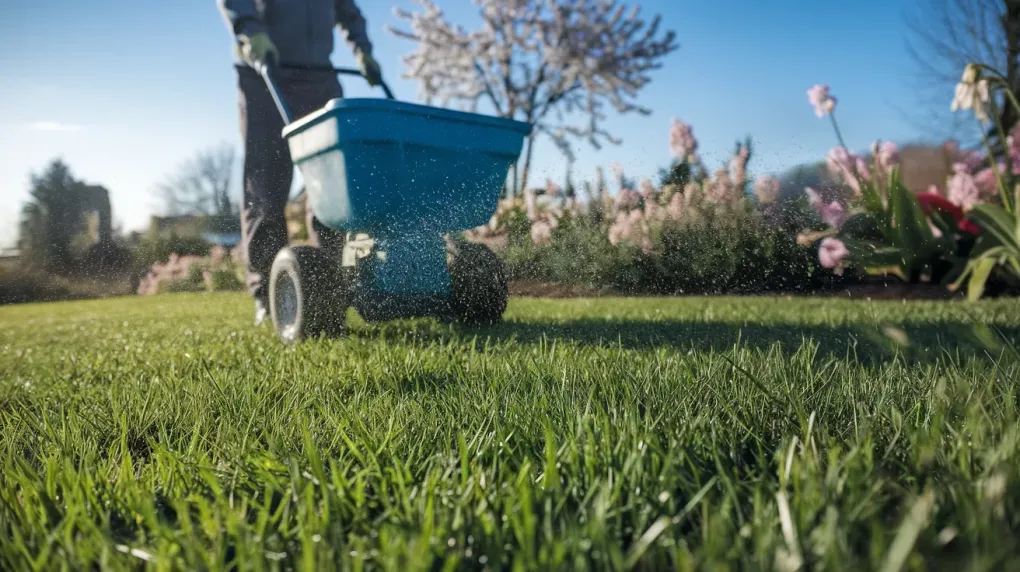
This is bermuda’s last heavy nitrogen application. 0.75-1 lb N per 1,000 sq ft. Use a calibrated spreader. Water in.
After August, shift to potassium-focused applications. Potassium builds winter hardiness — critical for bermuda transitioning out of dormancy cleanly next spring.
Monitor for Late-Season Pest Pressure
Chinch bugs and armyworms peak in August through early September. Continue weekly monitoring. The coffee-can test for chinch bugs and the soapy-water test for armyworms remain the simplest field diagnostics.
Reduce Mowing Frequency Slightly
Bermuda growth slows in late August as soil temps approach the upper limit. Mow every 5-6 days instead of every 4. Maintain the species-appropriate height — don’t scalp.
Begin Pre-Overseeding Plan for Bermuda Lawns
If you overseed bermuda with perennial ryegrass for winter color, August is the planning window. Order ryegrass seed (10-15 lbs per 1,000 sq ft for solid coverage). Schedule the overseeding for late September through early October when bermuda is going dormant.
Why Diagnostic Walks Are August’s Priority
Most lawn problems compound. A 50-square-foot grub-damaged area in early August becomes a 200-square-foot bare spot by late September if you don’t intervene. A small fungal patch becomes a recurring annual problem if you don’t identify the cultural condition feeding it. A compacted high-traffic zone becomes permanent thin turf if you don’t aerate.
The diagnostic walk takes 30 minutes for a typical residential lawn. The interventions cost $50-200 in materials and 2-4 hours of labor in September. The cost of skipping the diagnostic walk and dealing with established damage in October-November runs $500-2,500 in repair work — sod, full renovation, additional product applications.
Walk the lawn. Take notes. Photograph problem areas. Plan September around what you find. That’s August’s real work.
August Quick-Reference Checklist
Cool-Season (Zones 2-7):
- Walk and diagnose lawn condition
- Apply curative grub control if active damage (over 10 grubs/sq ft)
- Maintain deep watering and 4-inch mowing height
- Order fall fertilizer and grass seed for September
- Plan core aeration and overseeding zones
Warm-Season (Zones 7-10):
- Apply final heavy nitrogen fertilizer (bermuda 0.75-1 lb N)
- Monitor chinch bugs and armyworms weekly
- Reduce mowing frequency slightly (every 5-6 days for bermuda)
- Plan late-September ryegrass overseed if doing winter color
- Begin shift toward potassium-focused fertility for fall
Frequently Asked Questions About August Lawn Care
How do I count grubs?
Cut a 1-foot-square section of turf 3 inches deep with a spade. Peel back the section and count the white, c-shaped grubs in the soil and root mat. Replace the section, water heavily. Fewer than 5 per square foot is normal background population. 6-10 may show light damage. Over 10 indicates active feeding pressure that justifies curative treatment.
Should I overseed cool-season lawn in August?
Late August is acceptable in northern Zones (3-5) where soil temperatures drop earlier. For Zones 6-7, wait until September 1st-15th when soil temps fall below 75°F at 4 inches. Seeding into hot soil reduces germination by 40-60%. The September window is materially better.
What’s the best fertilizer for September?
For cool-season lawns, a balanced fall fertilizer (e.g., 24-2-12) applied at 1 lb N per 1,000 sq ft. The most important fertilizer application of the year — high nitrogen for top growth recovery, modest phosphorus, and potassium for winter hardiness. Scotts Turf Builder is the commodity option. Order in August before the seasonal stockouts.
Can I dethatch in August?
Generally no for cool-season lawns — too stressed from summer heat. Wait until September when active growth resumes, or schedule fall core aeration which solves the same drainage problem without the surface-damage stress. For warm-season lawns at full growth, late August dethatching is acceptable but timing favors May-June for that work.
What if I see grub damage but the count is below 10?
Below 10 per square foot, you’re in the gray zone — visible damage but not full pressure. Two options: apply preventive grub control next May (mark the calendar) and let this year’s small damage recover with September overseeding, or apply curative now if the damage is in a high-visibility area. For most lawns, the September overseeding plus next May’s prevention is the right plan.
What’s Coming in September?
September is the most important month of the year for cool-season lawns — overseeding window, primary fertilizer application, core aeration. The next month covers all of it. Our fall lawn care guide maps out the September-November plan in detail.
Lawn Care Year Navigation
| Previous | Hub | Next |
|---|---|---|
| ← July lawn care | 📅 Annual Calendar | September lawn care → |
Season hub: Summer Lawn Care Guide — full three-month summer program with cool-season and warm-season specifics.
Related Resources
- Annual Lawn Care Calendar — the complete 12-month schedule
- Summer Lawn Care Guide — full heat-stress program
- Fall Lawn Care Guide — what August’s diagnostic walks set up
- Yellow Grass Diagnosis — late-summer color issues
- Lawn Pests Guide — curative grub control window