November Lawn Care: What to Do Right Now

Last November, a client of mine in Cincinnati skipped his late-fall winterizer fertilizer because the lawn was already going dormant and he figured “the grass isn’t growing anymore, why fertilize?” The next March, his lawn greened up two weeks later than his neighbor’s, was thinner through the entire spring, and showed visible patches of winter-kill on the south-facing slope. The neighbor — same soil, same grass, same exposure — had applied his winterizer on November 8th. Same November temperatures, same December and January, completely different March lawns. The grass roots are still actively absorbing nutrients in November even when the visible blade has stopped growing — that’s the entire premise of the winterizer application.
Anton Schwarz, Resident Lawn Types Expert: “November’s mistake costs you March. The visible top growth has stopped, but the roots haven’t. Cool-season grass roots continue absorbing nitrogen into the crown until the soil freezes — that nitrogen becomes carbohydrate reserves for early-spring greenup and winter hardiness. Skip the November winterizer and you’re starting next spring’s lawn with empty fuel tanks. The neighbor who applied his on schedule is going to have a green lawn three weeks before yours.”
What Should Cool-Season Lawns Do in November?
Cool-season grasses transition into dormancy through November. Daytime temperatures consistently below 50°F signal the active-growth window has closed. But root activity continues until the soil freezes solid — typically late November in Zones 5-6, mid-December in Zone 7.
Apply the Winterizer Fertilizer
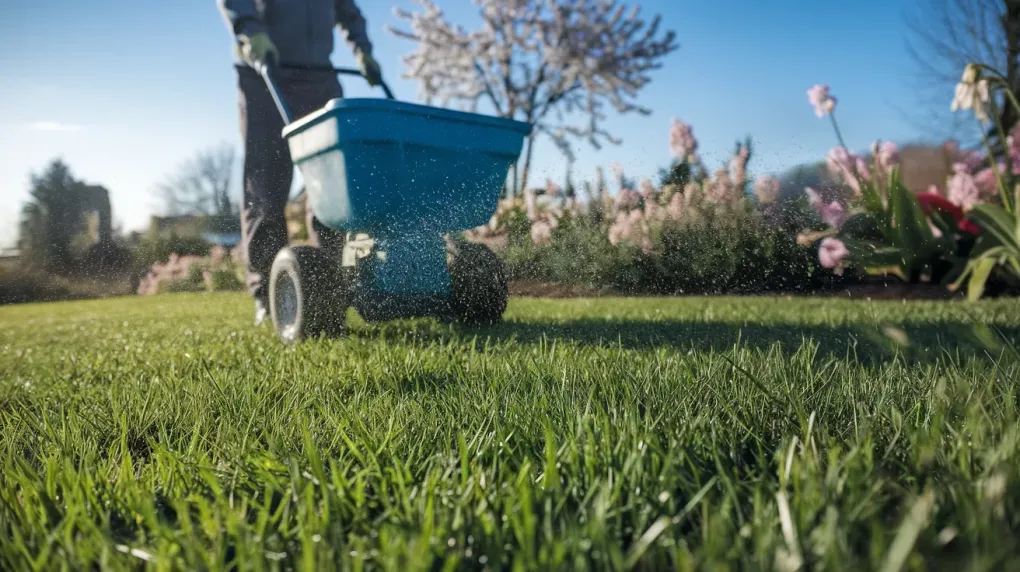
The winterizer (sometimes called late-fall or “third application”) is the second-most-important fertilizer of the year, behind September. Apply 0.75-1 lb N per 1,000 sq ft of a balanced winterizer product (typically 24-2-12 or 32-0-10 ratios) about 4-6 weeks after the October application.
Timing window: apply when daytime highs are consistently 45-55°F and overnight lows haven’t started freezing. The grass crown absorbs the nitrogen and converts it to carbohydrate reserves for winter survival and early-spring greenup. Apply too early (October) and the nitrogen pushes top growth that won’t harden off. Apply too late (after ground freezes) and the application sits on the surface waiting for spring runoff.
Use a calibrated broadcast spreader. Apply on a dry day; water in if rainfall isn’t forecast within 48 hours.
Final Mow
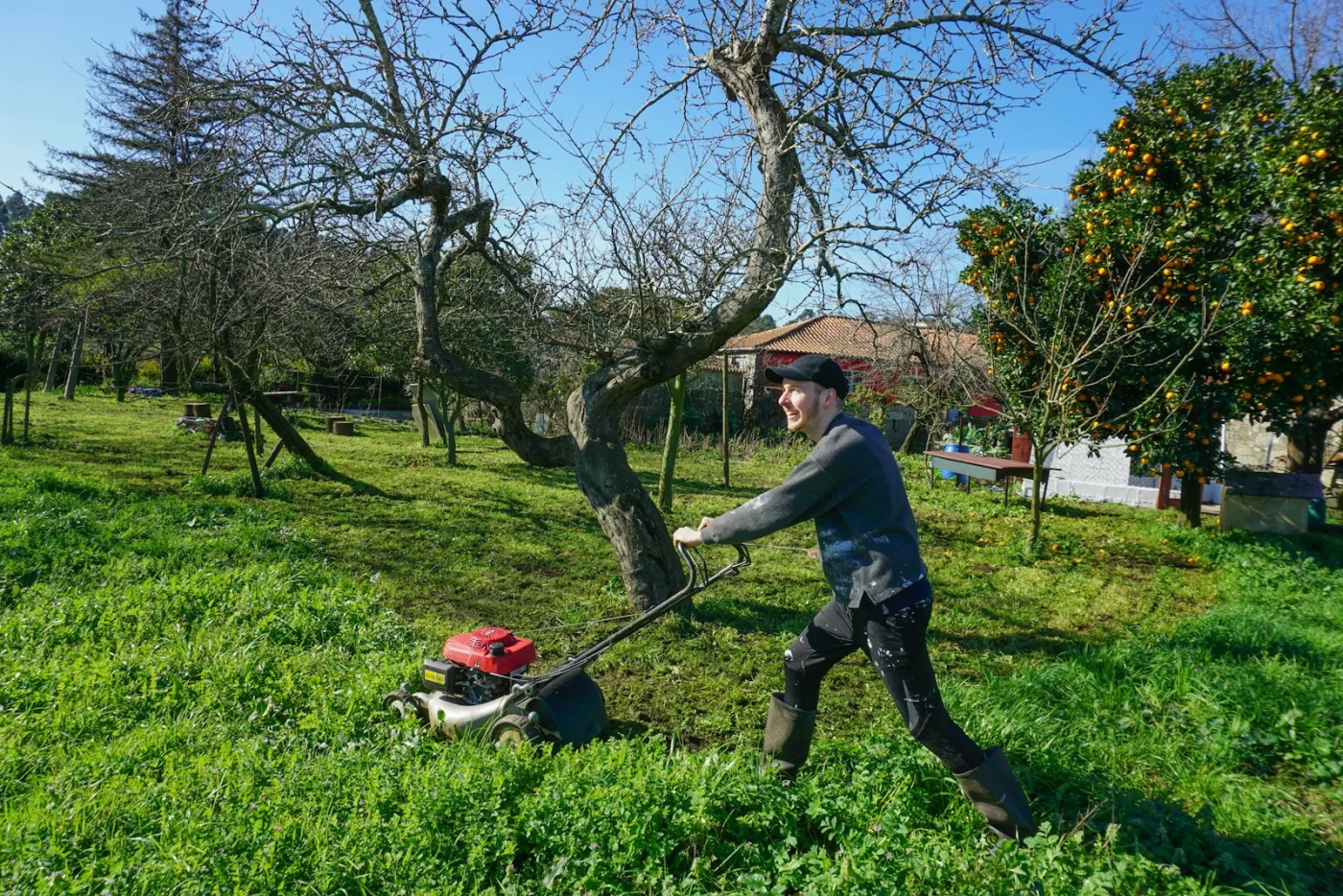
The final mow happens after grass stops actively growing — typically when daytime highs consistently stay below 50°F. Cut at the standard fall height (2.5-3 inches for KBG/ryegrass, 3-3.5 inches for tall fescue). Don’t scalp — short final cuts expose the crown to winter desiccation.
After the final mow, the mower goes into winter storage. Drain fuel or stabilize with Sta-Bil fuel stabilizer. Sharpen the blade for next spring (or schedule it with a service). Clean accumulated grass from under the deck.
Continue Leaf Cleanup
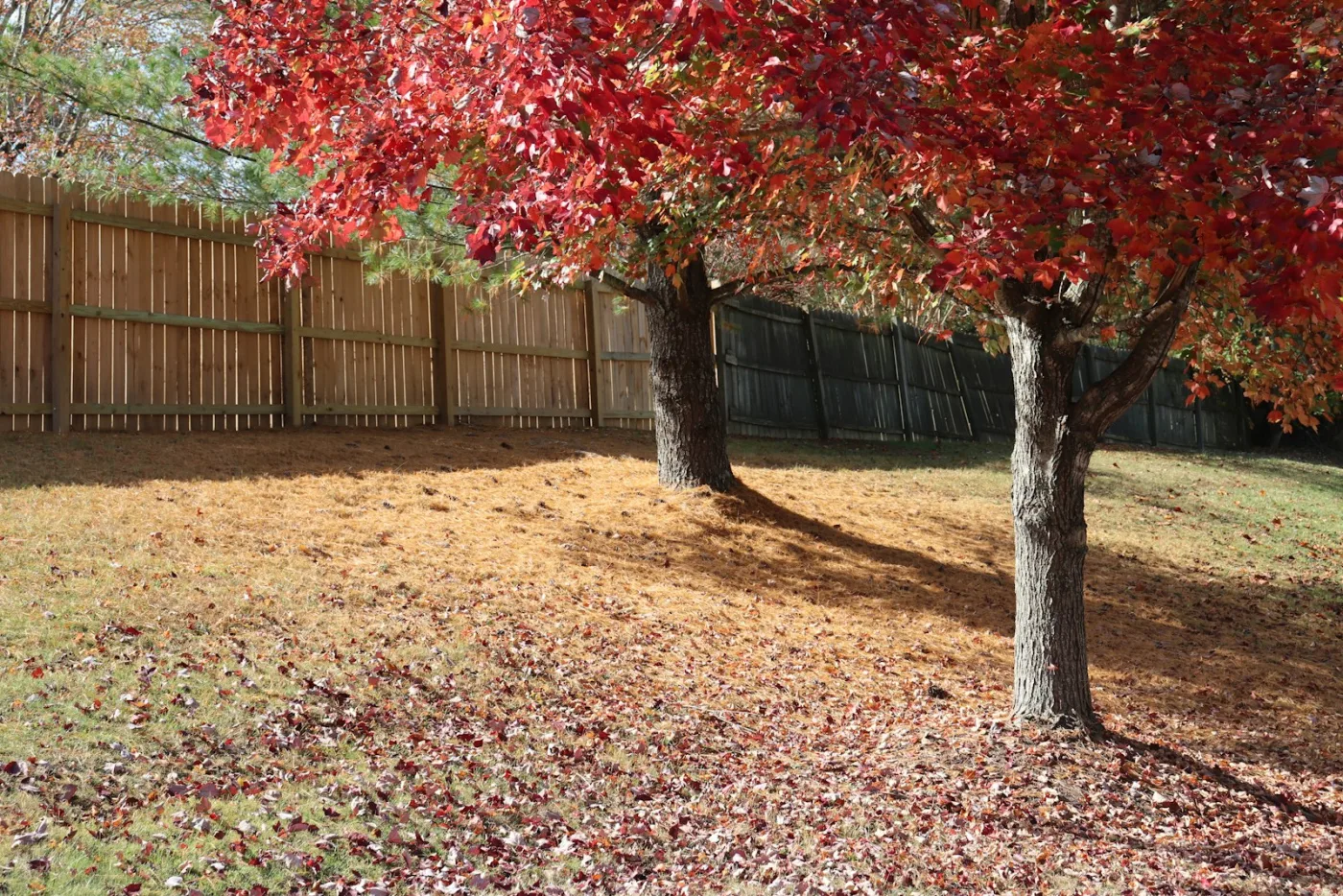
Final leaf drop happens through November in most US zones. Continue mulching or bagging weekly. Wet leaves left on the lawn into December cause snow mold patches that show up as gray-pink circles next March.
Final Watering Pass If Soil Is Dry
A dry fall heading into a cold winter increases winter desiccation damage. If November is dry, water once at 1 inch about a week before the ground freezes. After the soil temperature drops below 40°F, irrigation systems should be drained and winterized.
Equipment Winterization
Beyond the mower, winterize all gas-powered yard equipment. Drain or stabilize fuel in trimmers, blowers, and edgers. Remove batteries from battery-powered tools and store at room temperature, not in the cold garage. Check air filters and replace if dirty — they’re cheaper to replace now than to source in March.
What Should Warm-Season Lawns Do in November?
Warm-season grasses are fully dormant or transitioning to dormancy through November. Bermuda, zoysia, and centipede are brown across most of their range. St. Augustine in Florida and the Gulf Coast may still show some green tint.
Final Mow Before Dormancy
The final mow for warm-season grass is typically early-to-mid November in Zone 7-8, late November to early December in Zones 9-10. Cut at species-appropriate height (1-1.5 inches bermuda, 2-3 inches zoysia, 3-4 inches St. Augustine). Don’t raise the height for winter — warm-season grasses don’t need the same crown protection as cool-season grasses.
Maintain Ryegrass Overseed (If Applicable)
For bermuda lawns overseeded with ryegrass for winter color, November maintenance is light mowing at 2-2.5 inches every 2-3 weeks. The ryegrass holds green through winter; the bermuda stays dormant underneath.
No Late Fertilizer for Warm-Season
Skip November fertilizer for fully-dormant warm-season grass. The lawn can’t process nitrogen during dormancy; the application leaches away by spring. The September-October potassium application is the warm-season fall fertility window — November is hands-off.
Equipment Winterization
Same as cool-season — drain fuel or stabilize, sharpen blade, clean equipment, remove batteries. Warm-season properties may use equipment less aggressively in winter, but the principle holds.
Why the Winterizer Application Is November’s Priority
Cool-season grass roots remain physiologically active until soil temperatures drop below 40°F. The November application takes advantage of this active root absorption to load the crown with nitrogen-derived carbohydrates that power early-spring greenup before any new fertilizer application is possible.
The crown chemistry is the key:
- Without winterizer: spring greenup begins when soil temps cross 50°F and the crown has to first generate carbohydrate reserves from photosynthesis. Visible green growth lags 2-3 weeks.
- With winterizer: spring greenup uses pre-loaded carbohydrate reserves immediately. Visible green growth happens at the same soil temperature threshold but starts 2-3 weeks earlier.
Same lawn, same spring weather, two-to-three-week difference in visible greenup — entirely from a single November fertilizer application. The neighbor who applies on time has a green lawn while yours still looks brown.
November Quick-Reference Checklist
Cool-Season (Zones 2-7):
- Apply winterizer fertilizer (0.75-1 lb N/1,000 sqft)
- Final mow at 2.5-3.5 inches
- Continue leaf cleanup until last leaf drop
- Final watering pass if soil is dry
- Winterize mower and equipment (fuel stabilizer, blade, batteries)
Warm-Season (Zones 7-10):
- Final mow at species-appropriate height
- Maintain ryegrass overseed if applicable
- Skip late-fall fertilizer (potassium window already closed)
- Winterize equipment
- Inspect irrigation system before winter shutdown
Frequently Asked Questions About November Lawn Care
When exactly is the winterizer fertilizer window?
Apply when daytime highs are consistently 45-55°F and overnight lows haven’t started freezing. The grass blade should still be green even if active growth has stopped. In Zone 6, that’s typically the first two weeks of November. In Zone 5, late October to early November. In Zone 7, mid-to-late November. Use temperature, not the calendar.
Can I apply fertilizer over fallen leaves?
No. Fertilizer applied over a leaf layer doesn’t reach the soil; spring rains carry both leaves and fertilizer into storm drains. Mulch or remove leaves first, then apply fertilizer. If you have continuous leaf drop, plan the fertilizer application after the second-to-last expected leaf drop.
Should I aerate in November?
No for cool-season lawns — too late for the cores to be filled with seedling roots before winter, and aeration disturbs the crown during the hardening-off period. Plan core aeration for September. For warm-season lawns, aeration in late spring (May-June) at full growth is the right window.
How do I winterize my mower?
Three steps: (1) Drain fuel from gas mowers or run dry, optionally adding fuel stabilizer to remaining fuel; (2) Sharpen or replace the blade — a sharp blade is ready for the first March mow; (3) Clean accumulated grass and debris from the deck. For battery-powered mowers, remove the battery and store at 40-70°F (a heated garage or basement). Cold winter garages reduce battery capacity by 30-40% over time.
Should I rake my lawn one final time before snow?
If leaves remain on the lawn, yes — wet leaves frozen under snow promote snow mold (gray and pink patches that appear in early spring). After the last leaf drop, do a final rake or mulch pass. The lawn should go into winter dormancy with the grass blade visible, not buried under leaf litter.
What’s Coming in December?
December is the off-month — equipment is stored, the lawn is dormant, and your work shifts to planning next year. The next month’s content covers winter monitoring, soil-test review, and the off-season planning that pays off in February-March. Our winter lawn care guide maps the dormant-season program.
Lawn Care Year Navigation
| Previous | Hub | Next |
|---|---|---|
| ← October lawn care | 📅 Annual Calendar | December lawn care → |
Season hub: Fall Lawn Care Guide — full three-month fall program with cool-season and warm-season specifics.
Related Resources
- Annual Lawn Care Calendar — the complete 12-month schedule
- Fall Lawn Care Guide — full September-November program
- Winter Lawn Care Guide — December-February dormant program
- Best Fertilizer Spreaders — calibrated for winterizer
- Best Lawn Mowers — final-mow equipment check