June Lawn Care: What to Do Right Now

The first weekend of June 2024, I walked a Kentucky bluegrass lawn in suburban Cleveland that had been mowed at 2.5 inches all spring. The homeowner liked the “manicured look.” On June 6th, after three consecutive 88°F days and a Wednesday night rain, the same lawn had quarter-sized brown spots scattered across roughly a third of the front yard. Dollar spot, opportunistic, exactly as predicted by the short mowing height plus the heat-and-humidity combo. Two weeks earlier, raising the mowing height to 3.5 inches would have prevented every dollar of that fungicide bill.
Anton Schwarz, Resident Lawn Types Expert: “June is when cool-season lawns start asking the homeowner to do less. Raise the mowing height. Water deeper but less frequently. Stop fertilizing until fall. Most spring problems show up in June not because June is harsh, but because spring habits don’t translate. The lawn is telling you to slow down — listen, or watch the brown patches show up by mid-July.”
What Should Cool-Season Lawns Do in June?
Cool-season grasses transition from growth mode to survival mode through June. Soil temperatures climb past 75°F by mid-June in Zones 5-6, hitting the upper limit of cool-season productivity. The grass begins prioritizing root health over top growth — your job is to support that transition.
Raise the Mowing Height to 3.5-4 Inches
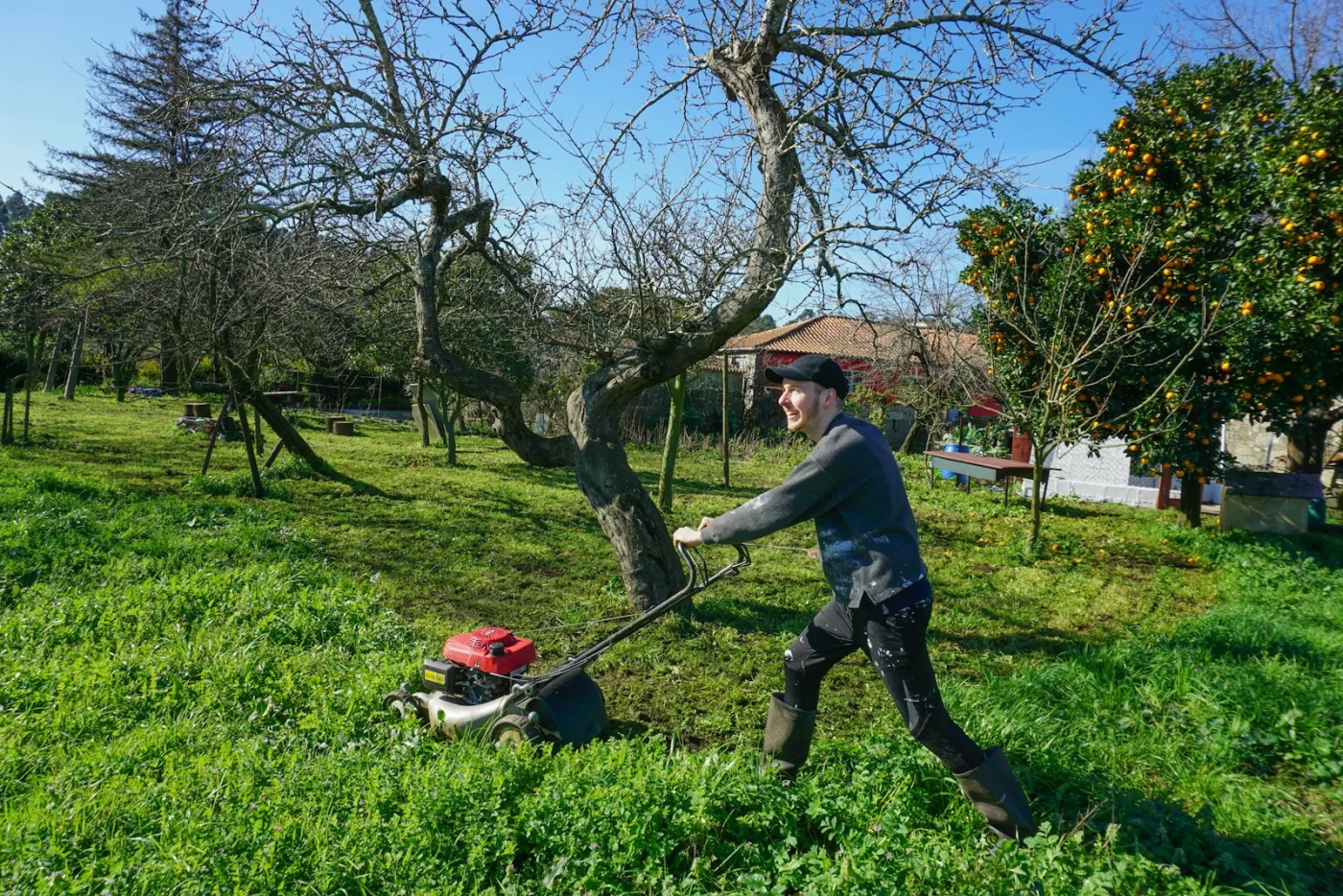
This is June’s most important change. Taller blades shade the soil, reduce moisture loss, and give the root system more reserves to weather summer heat. The taller cut also outcompetes germinating crabgrass shoots that slipped past your March pre-emergent.
Specific heights:
- Kentucky bluegrass and perennial ryegrass: raise from 3 inches to 3.5 inches
- Tall fescue: raise from 3.5 inches to 4 inches
- Fine fescue: raise from 3 inches to 3.5 inches
Mow when grass reaches about 5-5.5 inches (one-third rule). For most cool-season lawns, that’s every 7-10 days through June.
Switch to Deep, Infrequent Watering
Water 1 inch per week, delivered in two sessions of 0.5 inches each, spaced 3-4 days apart. Shallow daily watering keeps roots in the top 2 inches — exactly the wrong response heading into summer drought stress. Deep watering trains roots to grow down, where the soil stays cooler and moister longer.
Use a rain gauge or a tuna can to measure actual application. Most overhead sprinklers deliver 0.25-0.5 inches per hour; calibrate yours by running for a fixed time and measuring the catch.
Stop Fertilizing Until September
Heavy June fertilization on cool-season lawns is a common mistake. Nitrogen-pushed top growth diverts energy from the root system at exactly the wrong time. Skip June, July, and August fertilizer applications. The single most important fertilizer of the year goes down in September.
The exception: if your lawn is severely thin and you’re planning a fall renovation, a light June application (0.25-0.5 lb N) can buy you marginal density before the September overseeding window.
Watch for Fungal Disease
June’s warm nights + humidity = peak fungal pressure. Dollar spot, brown patch, and red thread all begin appearing in mid-late June. Cultural prevention works:
- Water in the morning so leaves dry by midday
- Avoid evening watering
- Don’t over-fertilize (nitrogen feeds fungal pathogens too)
- Maintain proper mowing height
Fungicides are a last resort. If preventive cultural practices fail, a curative application of Scotts DiseaseEx (containing azoxystrobin) handles most residential disease pressure.
What Should Warm-Season Lawns Do in June?
Warm-season grasses in Zones 7-10 are at peak growth in June. Bermuda, zoysia, and St. Augustine are aggressively expanding. Your job is to feed the growth and stay ahead of pests.
Mow Frequently — Bermuda May Need 2x/Week
Bermuda grass at full growth needs mowing every 4-5 days through June. Letting bermuda grow tall and scalping it back stresses the plant. Maintain at 1-1.5 inches for hybrid bermuda, 2-2.5 inches for common bermuda.
Zoysia and St. Augustine hold at weekly mowing. St. Augustine stays at 3-4 inches; zoysia at 2-3 inches.
Apply Second Round of Fertilizer
Bermuda gets 0.75-1 lb N per 1,000 sq ft monthly through August. Apply with a calibrated spreader for even coverage. Zoysia and St. Augustine get lighter rates (0.5-0.75 lb N) every 6-8 weeks.
Deep Watering Continues
1-1.25 inches per week, split into two or three sessions. Bermuda roots can extend 6 feet deep in sandy soil with proper deep watering. Don’t shift to daily light watering during heat waves — the wrong response, even though it feels intuitive.
Late-Spring Dethatching Window for Bermuda and Zoysia
If your bermuda or zoysia thatch layer exceeds 1/2 inch, late June is the correct dethatching window — the grass is in aggressive growth and recovers fast. Dethatch with a power rake at the manufacturer-spec depth setting. Follow with a light fertilizer to support recovery.
Why Raising Mowing Height Is June’s Priority
Mowing height is the single most controllable variable in summer turf health. Cool-season grasses cut at 2-2.5 inches enter summer with shallow root systems, exposed soil, and high moisture loss. Cut at 3.5-4 inches, the same lawn enters summer with shaded soil, deeper roots, and 30% lower water requirements.
The math from a Penn State turfgrass research study (multi-year trial): cool-season lawns mowed at 3.5 inches required 35% less irrigation and showed 60% less heat stress damage than identical lawns mowed at 2.5 inches. Same grass, same soil, same fertility — only the mowing height differed.
If you only change one thing this June, raise the mowing height. The other tasks matter; this one matters most.
June Quick-Reference Checklist
Cool-Season (Zones 2-7):
- Raise mowing height to 3.5-4 inches
- Switch to deep, infrequent watering (1 inch/week, 2 sessions)
- Stop nitrogen fertilizer until September
- Monitor for fungal disease (dollar spot, brown patch, red thread)
- Sharpen mower blade if not done at start of season
Warm-Season (Zones 7-10):
- Mow bermuda every 4-5 days
- Apply second fertilizer round (0.75-1 lb N for bermuda)
- Maintain deep watering schedule (1-1.25 inches/week)
- Dethatch bermuda or zoysia if thatch exceeds 1/2 inch
- Begin armyworm and chinch bug monitoring
Frequently Asked Questions About June Lawn Care
Will raising the mowing height make my lawn look “shaggy”?
No, when paired with proper mowing frequency. The “shaggy” look comes from mowing too infrequently regardless of height. A lawn mowed at 4 inches every 7 days looks just as manicured as one mowed at 2.5 inches every 7 days — it’s just taller. The visual aesthetic adapts within two weeks.
Why can’t I fertilize my cool-season lawn in summer?
Heavy summer nitrogen applications push top growth at the expense of roots — the opposite of what cool-season lawns need to survive heat stress. The grass also can’t fully use nitrogen above 80°F soil temperature; much of it converts to nitrate and leaches away. Skip June-August. Apply your annual nitrogen budget in September-October when the grass is actively recovering and prepping for winter.
How do I know if I have brown patch vs drought damage?
Brown patch shows circular patches with a dark “smoke ring” border, especially visible in early morning when dew is on the lawn. Drought damage is irregular, follows soil moisture patterns, and the grass tugs out easily. Brown patch grass tugs but doesn’t pull cleanly — the crown is still attached. If unsure, water the affected area thoroughly for two days; brown patch persists, drought damage greens up.
What’s the best fungicide for June disease pressure?
For dollar spot, brown patch, and red thread, products with azoxystrobin or propiconazole work for most homeowners. Scotts DiseaseEx is the easy-application granular option. For severe cases or commercial-grade control, look at Heritage G or Eagle 20EW from a Lesco dealer. Apply when symptoms first appear, not preventively for residential use — preventive fungicide programs make sense at golf-course budgets, not residential.
Should I water during a heat dome?
Yes — but the same way as a normal week. Don’t increase frequency to daily watering during heat waves; that trains shallow roots. Maintain 1 inch per week split into two sessions. Water in the early morning (4-7 AM ideal). If your lawn shows wilting (footprints stay visible after walking across the lawn), add a third 0.25-inch session — but resist the urge to switch to daily watering.
What’s Coming in July?
July is summer’s peak heat-stress month for cool-season lawns and continued aggressive growth for warm-season grass. The next month covers heat-stress recognition, grub-damage early warning, and the irrigation discipline that separates lawns that survive August from lawns that don’t. Our summer lawn care guide maps out the full June-through-August plan.
Lawn Care Year Navigation
| Previous | Hub | Next |
|---|---|---|
| ← May lawn care | 📅 Annual Calendar | July lawn care → |
Season hub: Summer Lawn Care Guide — full three-month summer program with cool-season and warm-season specifics.
Related Resources
- Annual Lawn Care Calendar — the complete 12-month schedule
- Summer Lawn Care Guide — June through August program
- Watering Calculator — summer deep-watering schedule
- Tall Fescue Care Guide — summer survival for cool-season
- Brown Patch Disease Guide — June fungal pressure