September Lawn Care: What to Do Right Now

September 8th, 2023 — I core-aerated a Kentucky bluegrass lawn in suburban Cincinnati that had been thinning for three years straight. The homeowner had been treating symptoms (extra fertilizer, more watering) without addressing the actual cause: a clay soil that had compacted to the point that water and oxygen weren’t reaching the root zone. We pulled 1/2-inch cores at 3-inch spacing, overseeded with a tall fescue blend, applied starter fertilizer, and watered for three weeks. By November 1st, the lawn was visibly thicker. By the following June, the homeowner sent me a photo with the message “best the lawn has ever looked.” That entire transformation traced back to a single September Saturday afternoon.
Anton Schwarz, Resident Lawn Types Expert: “September 1 through December 1 — that 90-day window makes 80% of next year’s lawn. Most homeowners think the spring growth is what makes a great lawn. The opposite is true. Spring shows you what fall built. Skip September overseeding and fertilization, and no amount of spring effort can fix it. Get September right, and spring is just maintenance.”
What Should Cool-Season Lawns Do in September?
Cool-season grasses are exiting summer dormancy and entering their primary growth window. Soil temperatures drop back into the productive 60-75°F range. The grass aggressively builds root reserves and recovers from summer damage. Every September task compounds into next year’s lawn.
Core Aerate (If Soil Is Compacted)
Core aeration is the foundation of fall lawn renovation. Pull cores 1/2 inch in diameter, 2-3 inches deep, at 3-4 inch spacing. Rent an aerator from a hardware store ($60-90/day) or hire a service ($150-300 for a typical residential lawn).
Compaction signals that justify aeration:
- Water pools or runs off rather than soaking in
- High-traffic areas show persistent thin turf
- Soil probe meets resistance within 2-3 inches
- The lawn has thinned over multiple years despite normal care
Skip aeration if the soil is sandy or already loose. Aeration on sandy soil delivers diminishing returns.
Overseed Thin Areas
September overseeding is the single highest-leverage cool-season lawn task. Time it within 2 weeks of core aeration so seeds drop into the open core holes. Match seed to existing lawn type:
- Kentucky bluegrass lawns: KBG-dominant blend (allow 14-21 days for germination)
- Tall fescue lawns: turf-type tall fescue blend
- Sun/shade mix areas: a transitional blend with both KBG and fescue varieties
Apply at 4-6 lbs per 1,000 sq ft for full overseed; 2-3 lbs per 1,000 sq ft for spot reseeding. Use a slit seeder for established lawns or a broadcast spreader for open areas.
Apply the Most Important Fertilizer of the Year
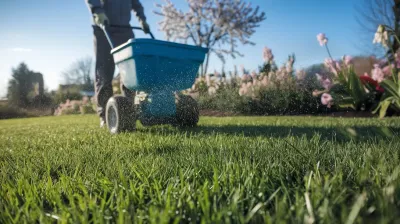
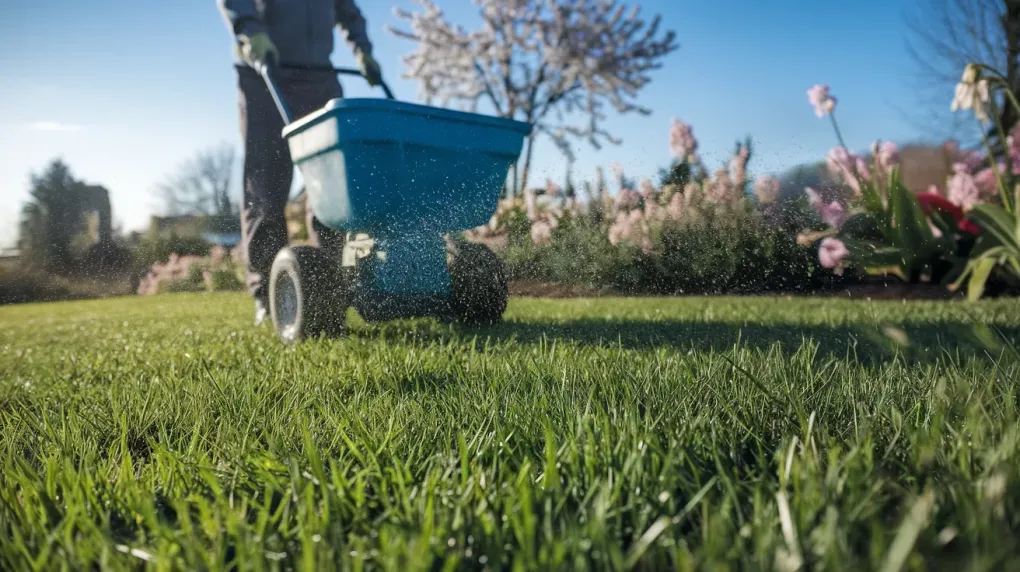
The September application is the single most important fertilizer of the year for cool-season lawns. The grass uses fall nitrogen to build deep roots, store carbohydrate reserves, and density the crown — all of which set up next year’s lawn.
Apply 1 lb of nitrogen per 1,000 sq ft from a balanced fall product (e.g., 24-2-12) using a calibrated broadcast spreader. For overseeded areas, use a starter fertilizer (e.g., 18-24-12) to support seedling establishment.
Resume Standard Mowing Schedule
Lower the mowing height back to 3-3.5 inches (or 3.5 for tall fescue). Mow weekly. Bag the clippings if the lawn is heavily seeded — clipping clumps can smother germinating seedlings. After 4-6 weeks, return to mulching the clippings.
Water New Seed Daily Until Germination
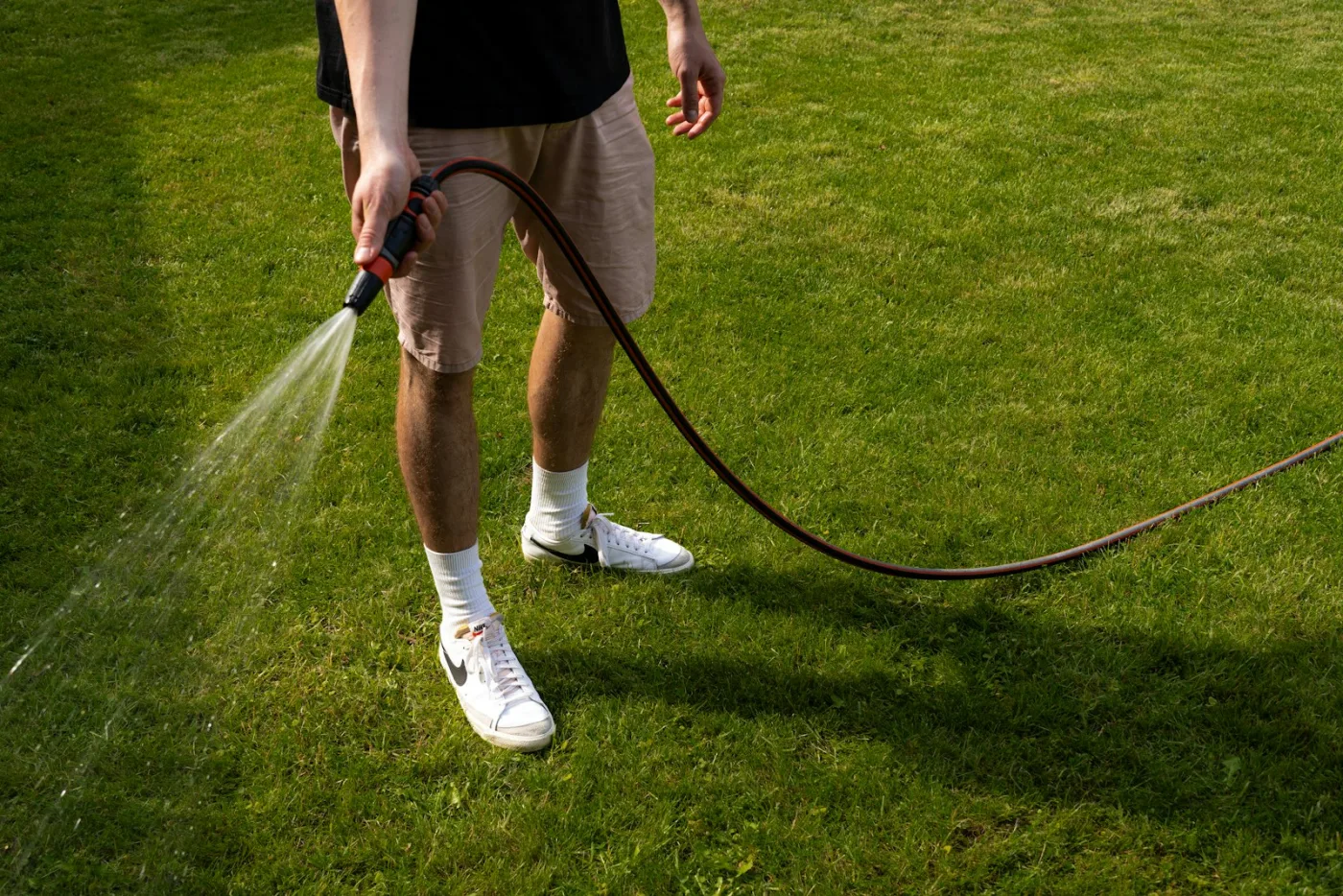
Newly seeded areas need consistent moisture for 14-21 days post-application. Water lightly 2-3 times per day for the first 7-10 days. Once seedlings reach 1 inch tall, transition to one daily deep watering, then back to standard 1-inch-per-week deep watering after the third mowing.
What Should Warm-Season Lawns Do in September?
Warm-season grasses begin slowing as soil temperatures drop toward 65°F. The fertility focus shifts from nitrogen to potassium for winter hardiness.
Apply Potassium-Focused Fertilizer
Bermuda, zoysia, and St. Augustine all benefit from a fall potassium application. A 5-10-30 or similar high-K product applied at 0.5-0.75 lb K per 1,000 sq ft strengthens cell walls heading into dormancy. This single application has more impact on next-spring greenup quality than any spring fertilizer.
Reduce Mowing Frequency
Bermuda growth slows in mid-late September. Mow every 7-10 days instead of every 4-5. Maintain the species-appropriate height — don’t raise prematurely (raising the height is a winterization step that happens in October-November).
Overseed Bermuda with Ryegrass for Winter Color (Optional)
If you want green color through winter on bermuda, late September is the overseeding window. Apply 10-15 lbs of perennial ryegrass per 1,000 sq ft to bermuda that’s mowed short and starting to taper growth. The ryegrass establishes by November, holds green through winter, and dies back in May as bermuda resumes aggressive growth.
Continue Weekly Pest Monitoring
Chinch bug and armyworm pressure persists through September in most warm-season climates. Continue the weekly coffee-can and soapy-water tests until soil temps drop below 70°F.
Why Overseeding + Fall Fertilizer Are September’s Priorities
The fall growth window for cool-season lawns is the primary opportunity to fix what’s wrong without the constant heat-stress trade-off of spring renovation. Cool soil + warm air + active root growth + low weed pressure = perfect renovation conditions. Spring overseeding fights pre-emergent applications and aggressive weed competition; fall overseeding fights neither.
The math from multi-year university trials:
- September overseed: 70-80% germination, 90%+ winter survival, lawn density gain of 30-40% over baseline by next spring.
- April overseed: 35-45% germination (pre-emergent prevents most), lower survival into summer heat, density gain of 5-10% over baseline.
Same seed, same lawn, opposite outcomes. Fall overseed every time. Spring is for maintenance, not renovation.
September Quick-Reference Checklist
Cool-Season (Zones 2-7):
- Core aerate compacted soil
- Overseed thin areas (4-6 lbs/1,000 sqft for full overseed)
- Apply fall fertilizer (1 lb N/1,000 sqft)
- Resume 3-3.5 inch mowing schedule
- Water new seed lightly 2-3x daily until germination
Warm-Season (Zones 7-10):
- Apply potassium-focused fall fertilizer
- Reduce mowing frequency as growth slows
- Overseed bermuda with ryegrass for winter color (optional, late September)
- Continue chinch bug and armyworm monitoring
- Plan winterization tasks for October-November
Frequently Asked Questions About September Lawn Care
When exactly should I overseed?
Overseed when soil temperatures at 4 inches drop below 75°F and stay below — typically September 1st in Zones 4-5, September 10-15 in Zones 6-7. Use a probe thermometer to confirm. Seeding into soil above 75°F drops germination rates significantly.
Can I overseed and fertilize on the same day?
Yes, and you should. Apply starter fertilizer (high phosphorus, e.g., 18-24-12) over newly seeded areas. The phosphorus supports seedling root development. For established lawn (no new seed), apply the standard fall fertilizer (24-2-12 type). Water both in with 0.25 inches of irrigation.
How often should I water new seed?
For the first 7-10 days, water lightly 2-3 times per day (10-15 minutes per session). The goal is keeping the top inch of soil consistently moist without standing water. Once seedlings reach 1 inch tall, shift to once-daily light watering for another week, then standard 1-inch-per-week deep watering.
Do I need to bag clippings during fall overseeding?
Bag clippings for the first 4-6 weeks while seedlings establish. Clipping clumps can smother small seedlings. After three mowings of the new grass, return to standard mulching. Outside of overseeded areas, mulching is always preferred over bagging.
What’s the best grass seed for fall overseeding?
Match seed to your existing lawn. For Kentucky bluegrass lawns, look for a KBG-dominant blend (Award, Midnight, Bewitched are quality cultivars). For tall fescue lawns, look for a turf-type tall fescue blend (Rebel, Falcon, Titan cultivars). Avoid bagged “contractor mix” — usually heavy on annual ryegrass that dies the following summer. Quality seed costs $5-7 per pound; budget seed costs $2-3 per pound and produces materially worse outcomes.
What’s Coming in October?
October is the second fall fertilizer application, leaf management, and the late-fall mowing transition. The cool-season lawn that overseeded in September needs continued support through October to establish before winter dormancy. Our fall lawn care guide maps the full September-November program.
Lawn Care Year Navigation
| Previous | Hub | Next |
|---|---|---|
| ← August lawn care | 📅 Annual Calendar | October lawn care → |
Season hub: Fall Lawn Care Guide — full three-month fall program with cool-season and warm-season specifics.
Related Resources
- Annual Lawn Care Calendar — the complete 12-month schedule
- Fall Lawn Care Guide — full September-November program
- Best Fertilizer Spreaders — calibrated for primary fall fertilizer
- Best Lawn Fertilizers — fall fertilizer ratios and starter products
- Kentucky Bluegrass Guide — fall overseed window
- Tall Fescue Care Guide — primary establishment month