February Lawn Care: What to Do Right Now


The week of Valentine’s Day in 2024, soil temps hit 51°F at 4 inches three days running in central Indiana. A client called me on the 16th asking if it was time to put down pre-emergent. We checked his soil-temp probe one more time on the 17th — 53°F. By the 21st, his Scotts Halts was on the lawn. That same week, his neighbor — same soil, same exposure — waited until “the usual time” in late March. By June, the neighbor’s lawn was 30% crabgrass and my client’s was clean. Same products, two-week timing difference, completely different outcomes.
Anton Schwarz, Resident Lawn Types Expert: “February is when most homeowners make their biggest mistake of the year — assuming spring is far enough away that timing doesn’t matter yet. Crabgrass doesn’t read the calendar. It germinates when soil temps cross 55°F for three consecutive days. In a warm February, that can happen six weeks before the calendar says ‘spring.’ Miss that window and you spend the rest of the year fighting crabgrass instead of growing grass.”
What Should Cool-Season Lawns Do in February?
Cool-season grasses are still mostly dormant in Zones 2-6. Zone 7 may see early greenup by month-end. Soil temperatures are the controlling variable for every February decision.
Monitor Soil Temperature at 4 Inches
Buy a probe thermometer. Stick it 4 inches into the soil in a sunny, exposed area. Check it three times a week starting February 1st. Crabgrass germinates when soil temps cross 55°F for three consecutive days; pre-emergent must be applied before that window opens.
In a typical year, central US Zone 6 hits 55°F in mid-to-late March. A warm February (like 2024) can compress that timeline by three weeks. Don’t trust historical “March 15th” rules — measure your specific yard.
Apply Pre-Emergent in Zones 7-8
If you’re in Zone 7 or 8 and your soil temps are climbing through the 50s, apply pre-emergent now. Prodiamine (active ingredient in Lesco’s pre-emergent and several Scotts products) is my preference for residential use — it offers a longer protection window than pendimethalin and doesn’t stain hardscape.
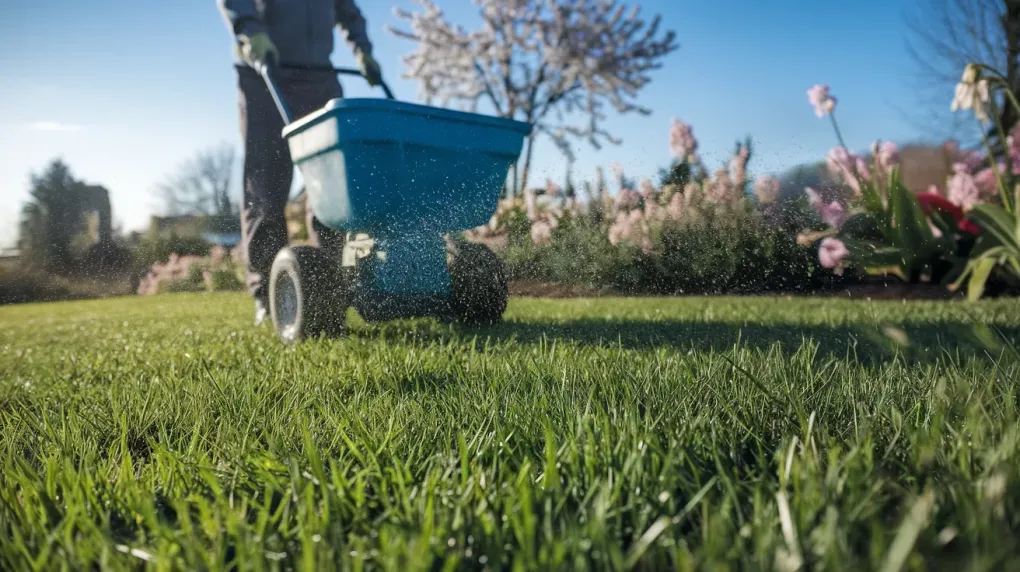
Use a calibrated broadcast spreader for even application. The Scotts Turf Builder EdgeGuard DLX handles pre-emergent without issue. Apply at the labeled rate, water in with 0.5 inches of irrigation, and don’t aerate or de-thatch for the rest of the season — both break the chemical barrier and let crabgrass through.
Calibrate Your Spreader Now
Calibration in February prevents the panicked over-application in March when everyone realizes their spring fertilizer settings drifted from last year. Run a known weight of product (5 lbs) through the spreader at your normal walking speed across a measured area. If it covers more or less than the bag predicts, adjust the rate dial.
What Should Warm-Season Lawns Do in February?
Warm-season grasses in Zones 7-10 are still dormant in most of the country. Florida and Gulf Coast Zones 9-10 see early greenup by late February.
Apply Pre-Emergent in Zones 7-9
For warm-season lawns, pre-emergent goes down February through early March in most southern climates. The same prodiamine product works for cool-season and warm-season lawns. Match the rate to your specific grass type — bermuda and zoysia tolerate the labeled rate; centipede should get a slightly lower rate (refer to the label’s centipede notation if available).
Mow Dormant Top Growth If Needed
Warm-season lawns with 4+ inches of dormant top growth get a single cleanup mow in mid-February. This isn’t required — it’s optional cleanup. Don’t mow dormant lawns just because the calendar says February.
Begin Soil-Temperature Tracking for First Fertilizer
Warm-season grasses break dormancy when soil temps hit 65°F at 4 inches consistently. First fertilizer goes down after the lawn is 50% green-up. In Zones 9-10, that’s typically late February into March. In Zone 7, expect April. Tracking the soil temp now lets you time the application precisely instead of guessing from the calendar.
Why Pre-Emergent Timing Is February’s Priority
Pre-emergent herbicides only work as a barrier — they prevent germinating seedlings from establishing. They do not kill mature crabgrass, dandelions, or other weeds. Once a weed has germinated and grown past the seedling stage, your only options are post-emergent herbicides or hand-pulling.
This means timing is everything:
- Too early: the chemical barrier degrades before seeds germinate. Pre-emergents have a half-life — most products last 10-14 weeks. Apply too far ahead of soil-temperature triggers and the protection window closes before crabgrass starts germinating.
- Too late: seedlings establish before the chemical barrier exists. By the time you see green crabgrass shoots in May, the application date already passed.
- Just right: apply 1-2 weeks before three consecutive days at 55°F at 4 inches. Soil-temperature monitoring is the only way to hit this reliably.
The state-extension forsythia-bloom rule is a rough proxy. Forsythia blooms when soil temps are climbing into the high 50s — slightly late for ideal pre-emergent timing in many years. Use a soil thermometer and beat the forsythia by a week.
February Quick-Reference Checklist
Cool-Season (Zones 2-7):
- Monitor soil temperature 3x weekly
- Apply pre-emergent in Zone 7 if soil temps trend warm
- Calibrate broadcast spreader
- Plan March pre-emergent application date based on soil-temp curve
- Service equipment if not done in January
Warm-Season (Zones 7-10):
- Apply pre-emergent in Zones 7-9 (prodiamine preferred)
- Mow dormant top growth if 4+ inches present
- Track soil temp for first-fertilizer timing
- Inspect irrigation system before spring use
Frequently Asked Questions About February Lawn Care
What’s the best soil thermometer?
A simple compost / soil probe thermometer ($15-25) reads soil temperature at 4 inches accurately. Avoid digital “smart” thermometers that read air temp at a sensor stuck in the soil — those drift in cold conditions. Mechanical bimetal probes are cheap and reliable.
Can I apply pre-emergent and starter fertilizer the same day?
Yes. Apply fertilizer first, then pre-emergent, water both in with 0.5 inches of irrigation. Combination “weed-and-feed” products exist and work fine for homeowners who don’t want two trips around the yard, but separate applications give you more control over rates.
How long does pre-emergent last?
Most prodiamine and pendimethalin products provide 10-14 weeks of protection. For a longer protection window covering both crabgrass and later-germinating annual grasses (goosegrass), apply a split application: half the labeled rate now, half the labeled rate 8-10 weeks later. Read the product label for split-application timing — not all products are formulated for it.
Is it ok to mow if my grass started growing early?
If the grass blade is actively growing (not just lifted from snow melt), a single light mow at the highest setting on your mower is fine. Don’t go below 3 inches. Cool-season grass needs the longer leaf surface for early-season photosynthesis.
When should I aerate?
Not in February or March. Pre-emergent applications create a chemical barrier in the top inch of soil; aerating breaks that barrier and lets crabgrass through. Plan core aeration for September (cool-season) or June (warm-season). Spring aeration is a common mistake — it undoes your pre-emergent investment.
What’s Coming in March?
March is when the pre-emergent window closes for most of the US, the first mow happens, and active growth resumes for cool-season lawns. We cover the dormancy-break transition and the first critical fertilizer application next month. Our spring lawn care checklist maps out the full March-through-May plan.
Lawn Care Year Navigation
| Previous | Hub | Next |
|---|---|---|
| ← January lawn care | 📅 Annual Calendar | March lawn care → |
Season hub: Winter Lawn Care Guide — full three-month winter program with cool-season and warm-season specifics.
Related Resources
- Annual Lawn Care Calendar — the complete 12-month schedule
- Spring Lawn Care Guide — what your February prep sets up
- Best Fertilizer Spreaders — calibrate before March pre-emergent
- Tall Fescue Care Guide — soil-temperature triggers by zone
- Bermuda Grass Guide — Zone 7-9 pre-emergent application window