How-To Guide · Weed Prevention
How to Apply Pre-Emergent Herbicide: The Soil-Temp Window That Decides Everything
March 14th, 2024 — I got a call from a homeowner in Indianapolis who'd applied prodiamine in mid-February because "the bag said early spring." By June, his lawn had the worst poa annua infestation I'd seen that season. The product wasn't the problem. The timing was. He'd applied two weeks before soil temperatures had hit 50°F at 4-inch depth, the active ingredient had partly degraded by the time crabgrass actually started germinating in mid-April, and the residual ran out before the late-spring germination window closed. We ended up doing a corrective dithiopyr application in May and a second prodiamine pass in September to break the cycle. The total cost was triple what a single correctly-timed March application would have cost. Pre-emergent isn't difficult — it's just unforgiving on timing.

★ Author
Anton Schwarz, Resident Lawn Types Expert
"Soil temperature is the only timing signal that matters. Calendar dates, forsythia bloom, almanac rules — all of those are loose proxies. A soil thermometer at 4-inch depth and your state extension service's soil-temp dashboard will tell you the actual answer for your zip code."
How Pre-Emergent Works (and Why Timing Matters)
Pre-emergent herbicides don't kill existing weeds. They form a chemical barrier in the top 1-2 inches of soil that inhibits seed germination — specifically, the cell division of newly-germinating root tips. Crabgrass and other annual weed seeds that try to germinate through that barrier fail.
The barrier has two timing constraints:
- Apply before weed seeds germinate. Once a crabgrass seed has sprouted and put out a root tip past the barrier, pre-emergent doesn't work. The window to apply closes when soil temperatures hit 55-60°F for 5+ consecutive days at 4-inch depth.
- Apply when the barrier will still be active during germination. Most residential pre-emergents have 8-16 week residual. Apply too early and the barrier degrades before peak germination starts. The Indianapolis lawn we mentioned applied in mid-February — by April when crabgrass actually started germinating, the prodiamine residual was already weakening.
The optimal window splits the difference: apply when soil temperatures hit 50-55°F for 3-5 consecutive days at 4-inch depth. That's typically when forsythia is in full bloom (the phenological proxy), but soil-temperature data from your state extension service is more precise.
Soil Temperature Sources by Region
Most state extension services publish daily soil-temperature dashboards by location. Some examples:
- Greencastonline.com — National crowd-sourced soil temperature map (free, accurate)
- Mesonet networks — Most state ag schools (Purdue, Ohio State, North Carolina State, etc.) publish hourly soil temperature data by station
- Soil thermometer at home — A $10 dial thermometer with a 4-6 inch probe, inserted into representative lawn areas, gives reliable readings. Take readings at 9 AM (when soil is at daily minimum) for 3-5 consecutive days.
Approximate calendar windows by region (with the soil-temp caveat — verify locally):
- Deep South (Atlanta, Dallas, Memphis): Late February to mid-March
- Mid-Atlantic / Mid-South (Charlotte, Nashville, Richmond): Mid-March to early April
- Lower Midwest (Indianapolis, Cincinnati, Columbus, St. Louis): Late March to early April
- Upper Midwest / Northeast (Chicago, Minneapolis, Boston, Detroit): Mid to late April
Product Selection
Three active ingredients dominate residential pre-emergent products:
Prodiamine
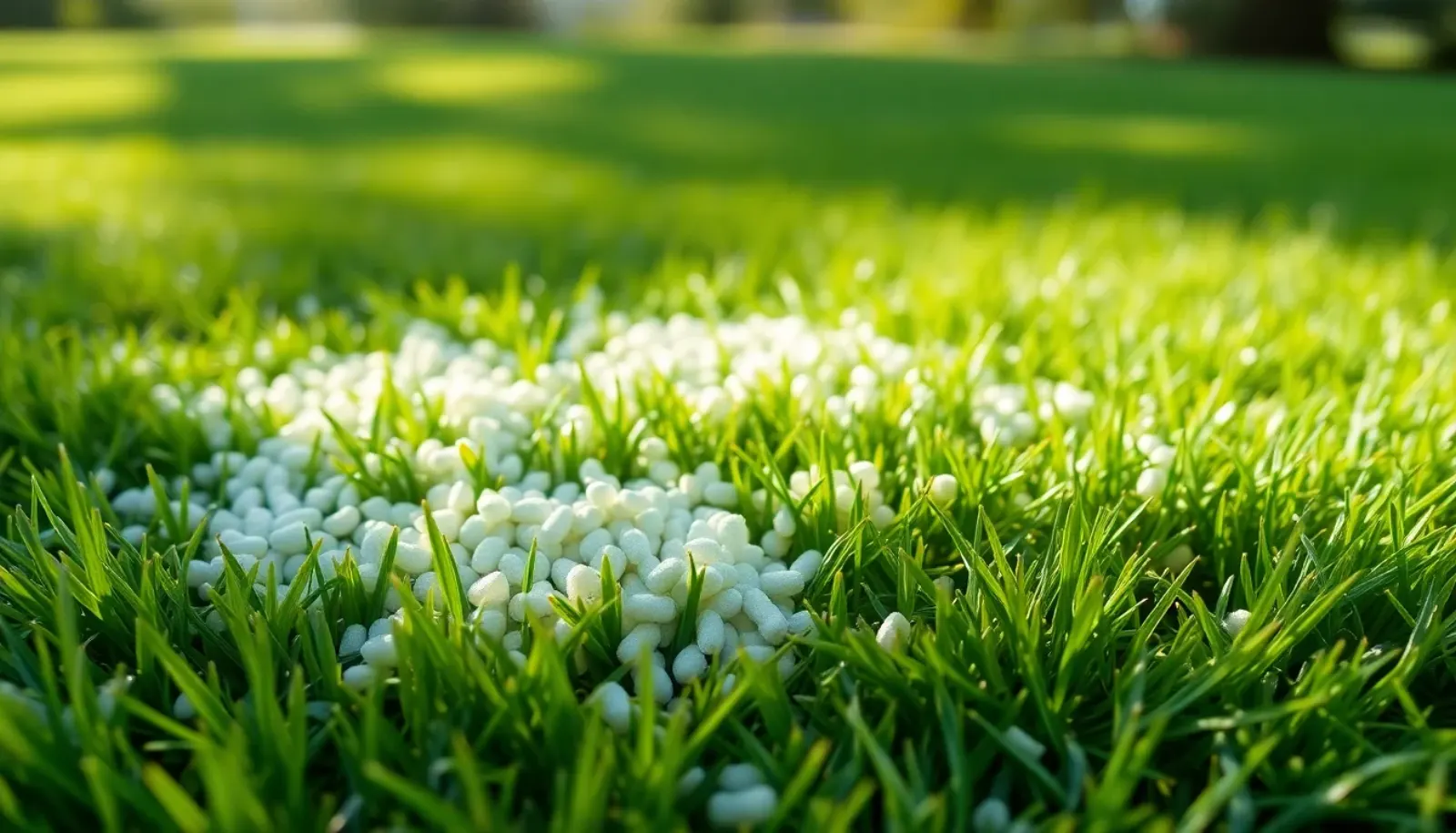
Longest residual (4-6 months). Granular and liquid forms. Excellent for crabgrass, goosegrass, foxtail, and most annual broadleaf weeds. Single spring application typically provides season-long control. Common products: Andersons Barricade*, Prodiamine 65 WDG, Quali-Pro Prodiamine.
Dithiopyr
3-4 month residual. Critical advantage: post-emergent activity on small (1-3 leaf stage) crabgrass. If your spring pre-emergent timing slipped and crabgrass already germinated, dithiopyr is the recovery product. Common products: Dimension 2EW, Bonide DuraTurf Crabgrass Preventer.
Pendimethalin
Shortest residual (8-10 weeks). Common in big-box-store products like Scotts Halts. Adequate for short-season control but typically requires a second application by mid-summer for full season coverage. Lower cost per bag.
For most cool-season homeowners, prodiamine in a single early-April application is the right answer. If you missed early spring or already see crabgrass, dithiopyr in May. For homeowners with budget constraint and a willingness to do two applications, pendimethalin in March + a second pass in May.
* Affiliate link. Prices reflect retailer pricing at time of writing and may differ at time of purchase. See our affiliate disclosure.

The Application Procedure
- Measure your lawn. Use our lawn size calculator. Pre-emergent is dosed by square footage — over-application damages turf, under-application leaves coverage gaps.
- Calibrate the spreader. Match the spreader setting on the product bag to your specific spreader model. If your spreader isn't on the chart, do a calibration test pass on a tarp first.
- Apply in two passes. Apply half the rate walking north-south and half walking east-west. Two-pass application produces uniform coverage and reduces stripe pattern from missed overlap.
- Water in within 24-48 hours. Most products require activation through 0.25-0.5 inches of irrigation or rainfall. The water moves the active ingredient from the granule into the soil profile where it forms the barrier. Skipping this step reduces effectiveness by 30-50%.
- Avoid surface disturbance after application. Aeration, dethatching, heavy raking, or reseeding after application breaks the chemical barrier. If you need to do those things, do them first, then apply pre-emergent. Or wait until next season.
Spring vs Fall: When You Need Both
Spring pre-emergent targets summer annuals — crabgrass, goosegrass, foxtail, prostrate spurge. Fall pre-emergent targets winter annuals — poa annua, henbit, chickweed, deadnettle.
See our poa annua control guide for the full fall pre-emergent timing and product selection. The short version: apply prodiamine in late August to mid-September when soil temps are dropping back through 70°F. This stops poa annua before it germinates in cool fall conditions.
Most homeowners with significant winter weed pressure benefit from both spring and fall applications. Most homeowners with primarily summer weed pressure can skip the fall application without penalty.
The Overseed Conflict
Pre-emergent and seed germination are mutually exclusive. The product doesn't distinguish between crabgrass seed and Kentucky bluegrass seed — it inhibits both.
Workarounds:
- Spring pre-emergent + fall overseed. Most common pattern. Apply prodiamine in early April; the residual dissipates by late August. Overseed in September.
- Mesotrione (Tenacity). The exception. Mesotrione is a pre-emergent that doesn't affect cool-season grass seed germination — you can apply it the same day as overseeding. Use this product when you need spring pre-emergent control AND spring overseed.
- Skip pre-emergent in overseed years. If you're rebuilding a thin lawn through overseed and starting fresh, skipping pre-emergent for one season and accepting some weed pressure is often the right tradeoff.
Common Mistakes (and How to Recover)
- Applied too early (February). Recovery: monitor soil temperatures closely; if you see crabgrass germinate in May, apply dithiopyr to clean up while still active.
- Applied too late (May, after germination started). Recovery: switch to dithiopyr (post-emergent activity on small crabgrass) plus selective post-emergent like quinclorac for medium crabgrass.
- Forgot to water in. Recovery: water immediately if within 7 days of application; effectiveness may be 30-50% reduced but not zero.
- Aerated after applying. Recovery: the disturbed zones lose barrier protection; expect spot weed emergence in those zones. Spot-treat with post-emergent as needed.
- Applied to brand-new lawn. Recovery: pre-emergent damages new seedling root development. If you've already done it on a lawn under 6 months old, water heavily for 7-10 days to dilute and accept some growth setback.
Frequently Asked Questions
When exactly should I apply pre-emergent in spring?
When soil temperatures at 4 inches deep reach 50-55°F for 3-5 consecutive days — not when the calendar says so. In the central Midwest (Indianapolis, Cincinnati, Columbus), that's typically late March to early April. In the upper Midwest (Minneapolis, Milwaukee), mid-to-late April. In the deep South (Atlanta, Dallas), late February to mid-March. Forsythia bloom is the legacy phenological indicator (apply when forsythia is in full yellow bloom), but soil-temperature data from a state extension service is more reliable.
Which pre-emergent product should I use?
Three products dominate the residential market: prodiamine (longest residual at 4-6 months, granular or liquid), dithiopyr (shorter residual at 3-4 months but post-emergent activity on small crabgrass — useful if timing slips), and pendimethalin (shortest residual at 8-10 weeks, common in big-box-store products like Scotts Halts). For most cool-season homeowners, prodiamine in a single April application provides season-long control. For homeowners who missed early spring timing and have small crabgrass already germinated, dithiopyr is the recovery product.
Can I overseed and apply pre-emergent in the same season?
Not in the same window. Pre-emergent works by inhibiting seed germination — it doesn't distinguish between crabgrass seed and grass seed. Standard rule: apply pre-emergent OR overseed, not both, within an 8-12 week window. Workaround: apply pre-emergent in early spring (March-April), overseed in fall (September) — by September, the spring pre-emergent residual is gone. Mesotrione (Tenacity) is the rare pre-emergent that allows simultaneous overseeding because it doesn't affect cool-season grass seed germination.
How do I avoid burn or damage to my lawn?
Three rules. (1) Apply at label rate, not "extra" — pre-emergent overdose damages turf root development and slows spring green-up. (2) Water it in within 24-48 hours (most products require activation through watering or rainfall). (3) Don't apply to heat-stressed lawns in summer — the herbicide stress combined with drought stress can yellow the lawn for weeks. For new lawns under 6 months old, skip pre-emergent entirely until the second growing season.
Should I do a fall pre-emergent application too?
Yes, if you have annual winter weeds — poa annua, henbit, chickweed, deadnettle. Fall pre-emergent applied late August to mid-September prevents these from germinating in the cool fall window. The same product (prodiamine) works for both spring and fall applications. If you primarily have crabgrass and summer annuals, a single spring application is enough. If you see green weeds in your dormant winter lawn, you have a fall pre-emergent gap to close.
Granular or liquid — which is easier to apply correctly?
Granular for most homeowners. Apply with a calibrated broadcast spreader (like Scotts EdgeGuard DLX), follow the bag setting, and walk a uniform pattern. Liquid pre-emergent requires a pressure sprayer, accurate mixing, and skill in maintaining consistent walking speed and overlap — easy to over- or under-apply. Liquid covers slightly faster on large lawns but the application accuracy gap typically favors granular for residential users.
Related Resources
- Weeds Pillar Guide — full weed identification and control framework
- Crabgrass Control — the primary pre-emergent target
- Poa Annua Control — fall pre-emergent target
- Dandelion Control — broadleaf weed companion
- How to Overseed a Lawn — coordinate with pre-emergent timing
- How to Make Grass Thicker and Greener — pre-emergent protects density gains
- Spring Lawn Care Guide
- March Lawn Care — early-spring pre-emergent timing window
- April Lawn Care — peak application month for most regions
- September Lawn Care — fall application month
- Lawn Size Calculator
- Best Fertilizer Spreaders — spreaders calibrated for pre-emergent application